[Lude Media | Dr. Yan Talks] The US Sets a “Kneel-Down Countdown” for the CCP, While China’s Trapped in a “Winning Big” Delusion; Terrorist Attempt to Assassinate Belgian Prime Minister Fails. 10/11/2025

Video Link: https://www.youtube.com/live/r3vmOZlrYi4?si=BCOa_vFISW0jwJRb
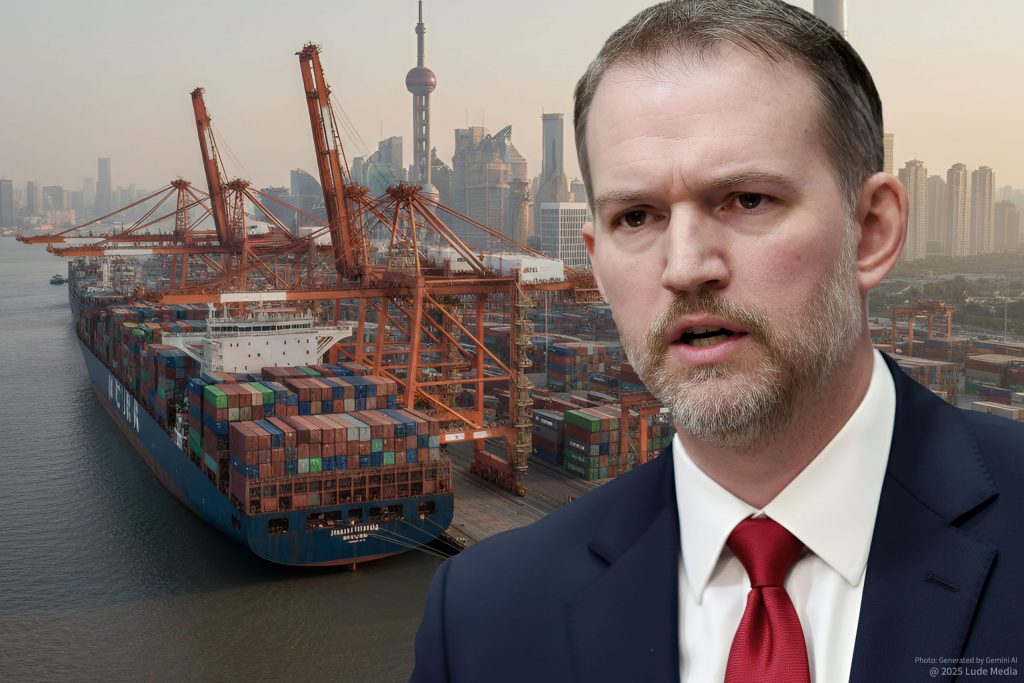
01|Belgium Foils Terrorist “Drone Bomb” Assassination Attempt on Prime Minister; Three Suspects Arrested
Belgium is the headquarters of the European Union. When Wang Yi visited Europe in June, he met EU leaders there—including Belgian Prime Minister Bart De Wever.
De Wever, a center-right conservative, has been targeted before. In 2023, when he was not yet the Prime Minister, five people attempted to assassinate him; at least one of them was an Islamist. This time, jihadists tried again but failed—the authorities arrested three suspects.
De Wever is pro-U.S., supports NATO, and is wary of the CCP. He was one of the earliest European politicians to call out the CCP’s infiltration, which naturally makes him an enemy of Beijing.
Belgium has long been a breeding ground for jihadist extremism.
02|De Wever Publicly Opposes German Chancellor Merz’s Proposal to Use Frozen Russian Central Bank Assets to Finance Ukraine
This stance is not pro-Russia—it’s rational.
◉ De Wever’s reasoning: legal and sovereignty risks.
He’s protecting Belgium’s clearing system, which is tied directly to the nation’s financial interests. He supports Ukraine, not Russia.
Using frozen Russian central bank assets for Ukraine sounds satisfying, but the reality is complex. Roughly €200 billion of Russian central bank frozen assets, 90% of which are in Brussels’ clearing bank where the EU’s headquarters are located. These include bonds, cash, and interest income.
Currently, the EU is only using the interest generated by these frozen assets. Germany’s proposal would go further—taking €140 billion of the principal and giving it to Ukraine as an interest-free loan, to be repaid later using Russia’s war reparations after defeat.
This, however, carries big legal risks. Russia remains a sovereign nation, and under international law, “frozen” does not mean “confiscated.” The funds are still legally protected. If Belgium’s clearing bank directly reallocates this money, it would constitute a violation of law.
Even if Russia ultimately loses the war, it could still sue to reclaim the funds through international arbitration, holding the EU and Belgium’s Euroclear Bank legally liable for misappropriation.
If the EU can arbitrarily seize frozen assets, no one would ever trust European financial institutions again. Without arbitration or a legal verdict, and with the war still undecided, using these funds would set a dangerous precedent—what happens if Palestine demands frozen Israeli funds next?
Such a move has no legal basis, and it’s reckless, risking Belgium’s financial status and the EU’s reputation.
De Wever is defending Belgium’s financial sovereignty and the EU’s reputation. He’s warning fellow EU nations that political will cannot override legal frameworks. Freezing assets is a political signal; confiscation needs judicial rulings.
◉ Why is Germany’s Merz pushing this proposal?
It reflects political anxiety overriding legal prudence.
Merz promoted this idea mid-year—while the trade war was still unfolding, the U.S. budget was gridlocked, and the EU’s promised €50 billion aid package for Ukraine was stalled. Ukraine faced a €20 billion shortfall, and Zelensky was struggling to find funds.
As the EU’s economic powerhouse, Germany didn’t want to pay more but feared Ukraine’s front collapsing. So they eyed Russia’s frozen assets. Germany wants moral leadership and clout in the EU, and since none of the assets are in Germany (90% in Belgium, 10% elsewhere), they face no legal blowback.
03|US Escalates Iran Sanctions, Targeting CCP Mainland Entities and Infrastructure for the First Time
◉ U.S. Treasury Press Release: “Treasury Dismantles Key Elements of Iran’s Energy Export Machine”
The U.S. sanctioned more than 50 individuals, entities, and vessels facilitating Iran’s oil and LPG sales, tied to billions in exports. The network relied on nearly 20 “shadow fleet” tankers, a crude oil terminal inside China, and a Chinese teapot refinery.
Commentary:
This marks a structural escalation in countermeasures against the CCP. Since 92% of Iran’s energy exports go to China, hitting Iran’s energy sector directly hits the CCP and its “shadow fleet.”
For the first time, the Treasury explicitly named the entities and infrastructure inside mainland China, which means sanctions now reach into Chinese territory itself. Previously, U.S. actions targeted isolated nodes; now, it’s targeting the full network. Some Hong Kong companies were also flagged as “money laundering hubs.”
This directly disrupts the China–Iran “petro-dollar swap mechanism.”
The sanction framework is now in place. New entities can simply be added over time.
With the UN’s snapback sanctions on Iran restored, the US piled on with expanded sanctions. The CCP’s now under dual pressure: US + UN.
◉ U.S. State Department Fact Sheet: “Sanctioning Entities Trading in Iranian Petroleum and Petrochemicals”
The Department of State is sanctioning approximately 40 individuals, entities, and vessels to stem the flow of revenue that the Iranian regime uses to support terrorism abroad. Combined with the Treasury’s 60 entities in sanction, roughly 100 entities are targeted in a coordinated action covering different parts of the supply chain.
◉ Treasury Sec. Bassent’s commentary:
“If tariffs were imposed on Chinese imports of Russian oil, the war would end quickly—but NATO and European allies must also act.”
◉ Bassent adds:
“Argentina’s President Milei has pledged to kick China out of Argentina. I believe by the end of this quarter, China will have no choice but to buy U.S. soybeans again.”
Beijing’s counter moves: spreading fake news, manipulating public opinion, and trying to stir discord between Trump, Bassent, and Milei. But these leaders meet privately—they know each other well. Such tactics are laughably ineffective.
◉ U.S. Trade Representative Greer on the U.S.-China trade war:
“China miscalculated big time. They’ll use economic coercion to sway US politics. In response, Vietnam and Cambodia cut soybean tariffs, and we’re talking to other Asian nations too. Outside China, global counter-tariffs are basically gone. We don’t need a trade war, but we’re ready if it comes.”
Commentary:
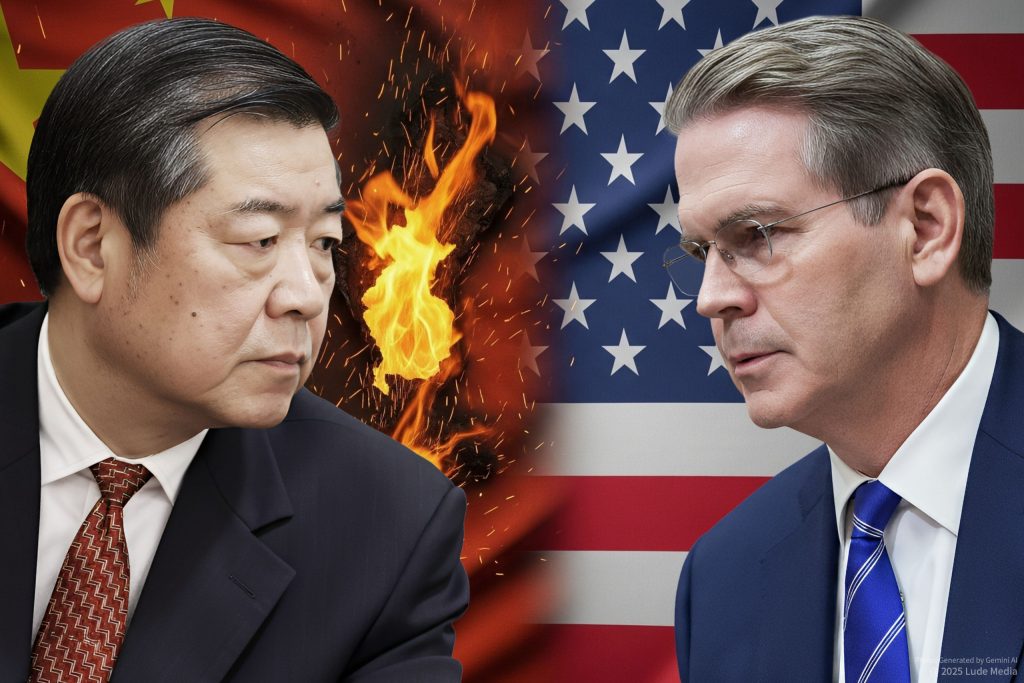
This is Washington’s message to the CCP: before the November 1st 100% tariff deadline, if Xi Jinping capitulates—“kneels,” so to speak—and agrees to “open up China,” the U.S. might still negotiate.
It’s now a countdown for Xi and the CCP to confess and surrender. If they fail to act or their response displeases the U.S., strong measures will follow—anything is possible. Trump already said:
“The old rules no longer apply!”
04|The CCP Is High on Its Own Propaganda—Trapped in the Hallucination of “Winning Big”
◉ First, it called rare earths its “trump card” and it blew up in their face.
Now, with U.S. stock markets slightly correcting, the CCP propaganda machine is celebrating again. Xi’s propaganda machines are in full force—“charging ahead, never yielding!”
Commentary:
Their unified message, “We are winning big”, is not real confidence—it’s delusional self-congratulation mixed with panic. It’s a psychological coping mechanism: crisis management, reassuring the public and diverting attention.
They claim they’re crushing the US, that America’s out of moves, but always end with “we still need to talk.” The CCP’s at a point where the regime knows the tide’s irreversible but clings to legitimacy, stuck in a mix of self-deception and fear.
◉ Example of propaganda: “China Dumps $309.6 Billion in U.S. Treasuries, U.S. Government Shuts Down, Experts Exclaim: China’s Ace Card Works!”
The article boasts that China’s Treasury slashed US debt holdings, and bought tons of gold, which shows strength:
“Since 2022, China’s holdings of U.S. Treasuries fell from 36.2% to 22.8%, while gold reserves rose for 15 consecutive months to 7.3%, driven by asset safety and returns.”
Commentary:
This rhetoric is both laughable and idiotic.
The so-called “ace card” means China sells U.S. Treasuries and buys gold—but that’s exactly what America wants. The more Treasuries China dumps, the more liquidity the market gains, strengthening the dollar system.
As for the gold—much of it is stored in Western vaults in London, Switzerland, and New York. So when the U.S. eventually forces China to “open up,” it can seize, offset, or confiscate those holdings as repayment or penalties.
In other words, Beijing is proudly preparing its own collateral for Washington. The U.S. couldn’t be happier.
Would you like me to translate this one into Chinese (formal everyday) next, matching the previous bilingual format you’ve been using?

Responses