[Lude Media | Dr. Yan Talks] Trump Orders Xi Jinping to Meet in South Korea: The CCP Only Respects American Power! Prince Andrew Gives Up His Title as the British Monarchy’s Revival Pushes Toward Ending the CCP! 10/17/2025

Video link: https://www.youtube.com/live/QSIgRsZzvVg?si=ojVID2ORKU0xeZ9t
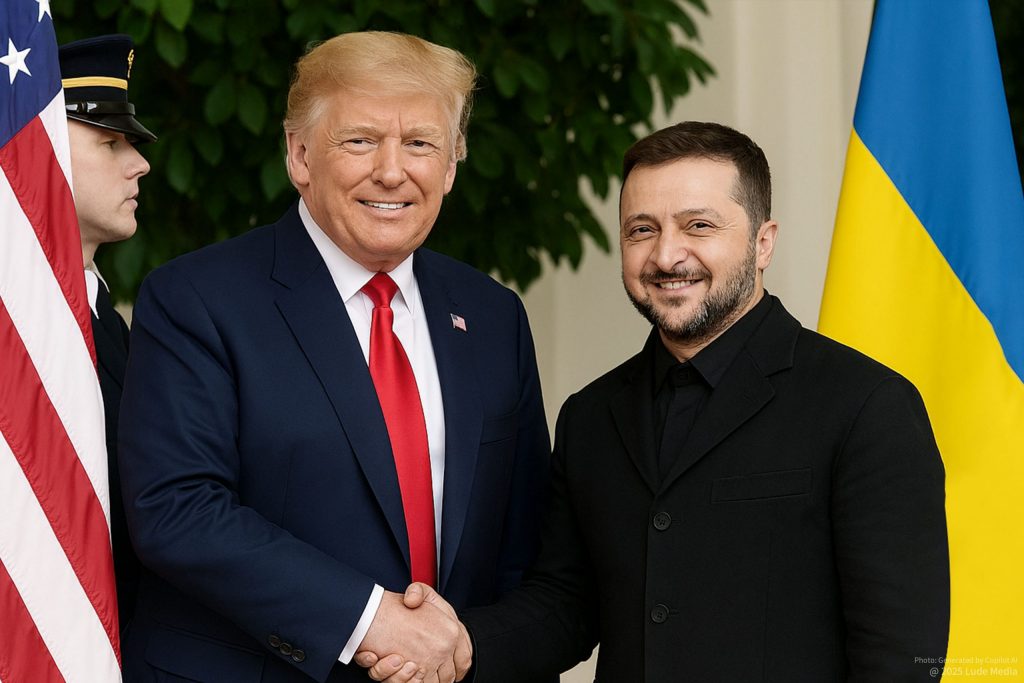
01|Trump Meets Zelensky Again
Trump complimented Zelensky on his jacket, saying it looked sharp and stylish. In reality, their previous “awkward” meeting at the White House was just a staged act—a performance meant to mislead Xi Jinping and Putin.
02|Maduro’s Plan to “Plea for Mercy” Flatly Rejected by the U.S.
The White House directly turned down Maduro’s proposal to step down in three years and transfer power to his vice president.
Maduro clearly doesn’t see the reality. He’s still dreaming, thinking he can outlast President Trump. Today, the U.S. struck another Venezuelan drug-running submarine. Trump said Maduro had already promised to give up everything just to save his own skin. The U.S. achieved peace through strength. In the Middle East and with Russia, it demonstrated by showing it can bomb Fordow. With Maduro, flexing muscle by blowing up a narco-submarine is a clear message.
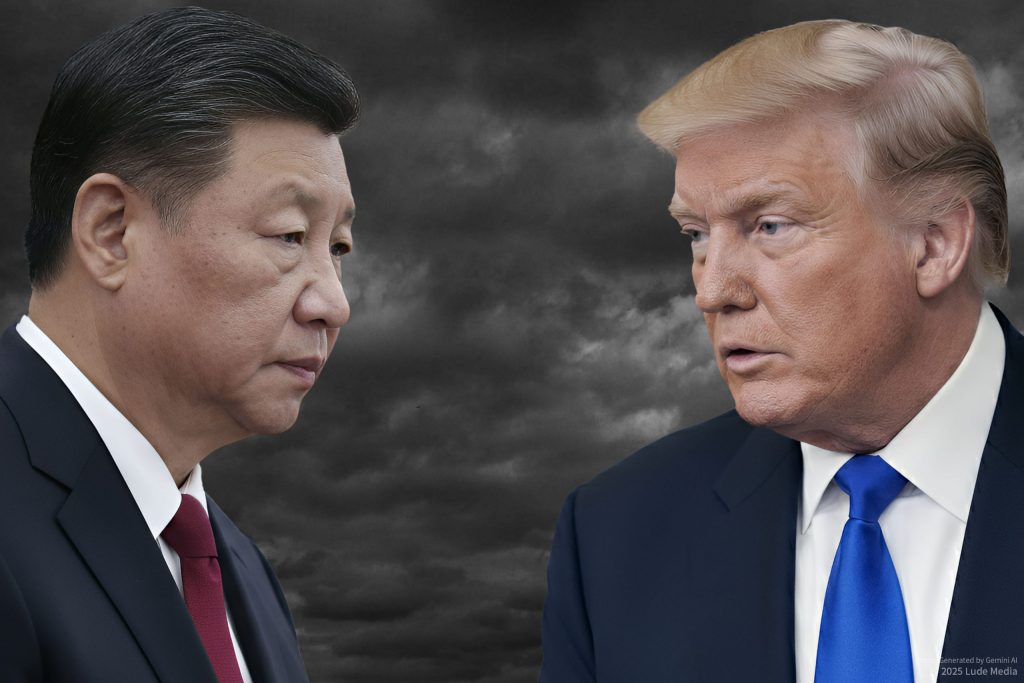
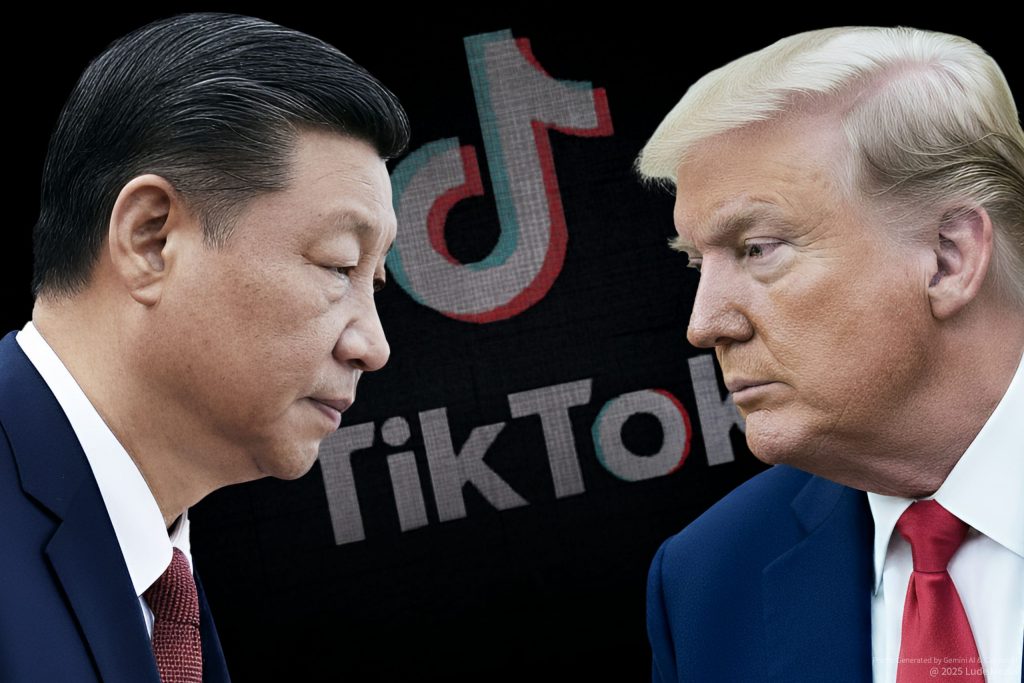
03|President Trump on the CCP: Beijing Only Respects American Strength!
◉ When asked whether Xi Jinping had congratulated him on the historic “Gaza Peace Agreement,” President Trump replied, “Well, I heard he did”
Comment: Trump clearly doesn’t care what Xi says — he doesn’t take him seriously
◉“But I’ll be meeting with him in a couple weeks. Yes, we’ll meet — we’ve even scheduled a one-on-one session.”
Comment: Two weeks left, yet Xi’s side still hasn’t confirmed anything — even the South Korean government hasn’t verified his attendance. It’s reminiscent of what happened in June: Xi vanished from the public eye, but Trump confidently said he’d get a call from him within a week. Sure enough, when Trump pressed on Xi’s “soft spot” — his daughter — Xi took the phone call right away.
◉”But they’re always looking for an edge. They ripped off our country for years. They did it to Bush, and they did it to everyone.”
Comment: In other words, it’s not just about Xi Jinping — the entire CCP system has to go. They’ve always operated this way, constantly working against the United States.
◉”I do not know what’s going to happen. I cannot tell you that.”
Comment: That’s absolutely right — Trump is dealing with a delusional madman. You can’t predict what someone that unhinged might do.
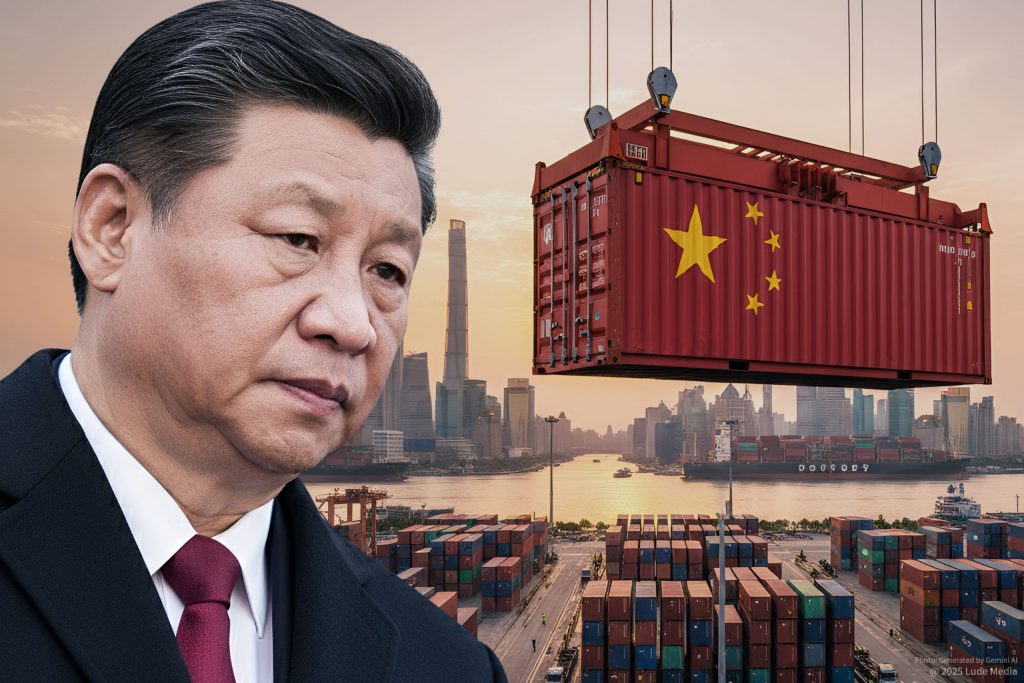
◉ When asked about raising tariffs on China to 157%, President Trump said, “It’s not sustainable, but that’s what the number is. It’s probably not — it could stand, but they forced me to do that. “
Comment: President Trump is fully confident — he doesn’t care whether Xi can withstand the pressure or not.
◉ Trump talked about Xi, “He’s a very strong leader, a very amazing man if you look at what he’s done and what he’s — where he’s — his life is an amazing story. It’s a story for a great movie.”
Comment: Trump has basically written Xi’s political obituary — he’s summing up Xi’s entire “career.” And considering Xi’s obsession with living to at least 150 years old, hearing this must have driven him absolutely mad.
04|In-Depth Analysis: NATO Forced a Russian Kilo-Class Submarine to Surface
◉ A Russian Kilo-class submarine surfaced near the Strait of Gibraltar and was subsequently escorted through NATO waters by British, France, and Dutch forces.
The Kilo-class submarine, known for its extremely low noise signature, was forced to surface between September 26 and October 15. After surfacing, it was escorted and driven away by allied naval forces in relay, while a Russian rescue tug trailed alongside—a scene that looked, as some observers put it, like a group of cats escorting a mouse, making sure it didn’t dive back underwater to escape.
“What a change from the 1984 Tom Clancy novel The Hunt for Red October. Today, it seems more like the hunt for the nearest mechanic,” NATO Chief Rutte said, saying the “broken” vessel was “limping” home.
Comment: This was utterly humiliating for Russia. The whole scene turned into a public mockery by NATO, with Moscow left looking completely disgraced and powerless.
◉ On October 10, an article titled “US, EU navies turning 750,000 miles of seafloor cables into submarine-hunting sonars” reported: “Undersea fiber-optic cables, which stretch over 1.2 million kilometers (750,000 miles) across the ocean floor, are being used in a new way for anti-submarine warfare. A developing technology called Distributed Acoustic Sensing (DAS) is making this possible.
Originally designed for communications, these cables are now adapted to act as giant, passive sonar arrays capable of detecting, classifying, and tracking submarines, surface vessels, and other undersea activity across sea lanes. “
Comment: The U.S. and its allies have already deployed this DAS technology. The timing of this news is telling—most likely, DAS is now in full-scale operation and highly effective, so NATO is signaling its underwater information dominance.
How was Russia’s supposedly advanced Kilo-class submarine detected and forced to surface? Was it really, as Moscow claimed, just a fuel system malfunction? And why wasn’t the sub destroyed? At the moment, Trump is in negotiations with Russia, so every display of force is deliberately limited and controlled. If the submarine had been sunk, the Trump-Putin communications might not have gone smoothly.
China is also trying to steal DAS, but what it gets is likely incomplete or fake. Russia certainly isn’t expecting Beijing to share the stolen technology..
The forced surfacing of the Russian Kilo is also a major blow to China, especially since its Type 093/417 submarines are essentially non-functional. Any hope for using other submarines seems slim. China, of course, cannot admit this, so it keeps claiming the submarine surfaced due to its own “malfunction.”
But Russia—the “double-headed eagle”—has already been punched on the western head, so both heads now need to turn east, seeking assistance from China.
05|Prince Andrew Gives Up His Title: British Monarchy’s Revival Moves Forward in the Push Against the CCP
Prince Andrew is not only linked to the Epstein case but also connected to Chinese spy Yang Tengbo from the “48 Group Club.” He stated that “to put my duty to my family and country first”, which is why he’s relinquishing his royal titles and honors. The title “Prince” refers to his identity, not a formal title, so he retains it—making this a relatively dignified exit.
The decision reportedly came after several days of high-level internal meetings at Buckingham Palace. Officials described the situation as having “reached a critical point,” saying that a string of recent revelations threatened the monarchy’s reputation, prompting the King to effectively press the “nuclear button.” Previously, the Palace had avoided taking such drastic measures.
Now, Prince Andrew is facing both old and new scandals, including his alleged involvement in a recently “withdrawn espionage case.” Reports say he met at least three times with Cai Qi, a close ally of Xi Jinping.
Between 2018 and 2019, Xi reportedly arranged secret meetings between Cai Qi and Prince Andrew, with one key objective: to ensure that the UK would stay out of the 2019 Hong Kong anti-extradition protests.
06|The “internal cleanup” within the British royal family is widely seen as a preparatory move to activate the Crown’s reserved powers
The UK’s political system has become deeply entangled with CCP infiltration, leaving it unable to act decisively through normal channels — which is why the British Crown now has to revive its long-dormant royal prerogatives. The revival of royal authority marks a pivotal shift, and Prince Andrew’s relinquishment of his royal titles is seen as a symbolic turning point.
At the same time, the voided espionage case is being used as a strategic lever by both the UK and the US to expose and counter the CCP’s intelligence and influence networks. The issue has escalated beyond individual scandals or government corruption — it has become a matter of national security.
London and Washington are now coordinating a comprehensive internal restructuring, moving in tandem to purge CCP-linked influence from their institutions. Their stance toward Beijing is becoming increasingly explicit:
The CCP is no longer just a rival — it’s a direct threat to Britain’s sovereignty and survival.
What the British royal family is now doing is an “internal purification” — a deliberate, disciplined self-correction. Historically, every time the monarchy has done this, it has coincided with a major geopolitical turning point: moments when the Crown was preparing to invoke royal authority to intervene during a crisis of national governance or legitimacy.
The royal prerogative cannot be exercised lightly — misuse would be seen as tyranny. Queen Elizabeth II was deeply respected precisely because she never abused royal power, and that restraint was her strength. It’s also one of the reasons the CCP resented her — she embodied stable moral authority that couldn’t be manipulated.
Today, the monarchy is reestablishing its moral credibility — cleansing itself first — so that when King Charles later exercises “emergency royal powers”, it will carry public legitimacy and moral weight. Otherwise, the CCP could exploit Prince Andrew’s scandals to smear and delegitimize the Crown.
Beijing has been spreading conspiracy theories and orchestrating information warfare against the British monarchy — even targeting a cancer-stricken patient for propaganda attacks — just as it does against Israel. The logic is simple: without the monarchy, the CCP believes it can more easily subvert the political systems of the UK and Commonwealth nations such as Australia and Canada.
That’s precisely why the British royal family is aligning firmly with the United States — to preserve its sovereignty and moral authority in the face of CCP aggression.
◉There is clear historical precedent for the British royal family carrying out an “internal purge.”
In 1936, King Edward VIII abdicated and his brother George VI ascended the throne.
The public was told it was a romantic story — “a king who gave up his crown for love.” But in reality, that was a later, sanitized version of events. The real reason was far more serious: Wallis Simpson (later the Duchess of Windsor) was strongly suspected of being a Nazi agent.
During the 1930s, as Europe moved toward war, Edward VIII and Simpson openly expressed pro-Nazi sympathies. MI5 had obtained intelligence showing that Simpson had been leaking royal information to the German ambassador, and Edward himself had privately voiced sympathy for Germany’s policies and contempt for parliamentary democracy — a dangerous mindset for a monarch who could easily be exploited by Hitler’s regime.
This created a national security crisis of the highest order — one even more perilous than today’s political scandals. The royal family and government leadership therefore acted decisively: rather than using public legal measures or triggering political upheaval, they invoked a constitutional pretext — that Edward’s marriage was unconstitutional — to force an abdication behind closed doors.
In essence, it was a formal internal severance, a quiet but deliberate act of royal self-preservation — the Crown cleansing itself to protect the British state.
◉The U.K. has now been infiltrated by the CCP from the roots up, and if the King intends to exercise emergency constitutional intervention powers, he must first eliminate every possible point of vulnerability — anything that could be used to accuse the Crown of collusion with Chinese interests.
Prince Andrew’s relinquishing of his royal titles is therefore no isolated scandal cleanup, but rather a constitutional act of consensus — one agreed upon by the King, the Prince of Wales, and the Privy Council.
It carries the symbolic weight of a “ceremonial execution” within the monarchy — an act initiated and led by King Charles himself.
This move restores the moral and apolitical authority of the Crown, pulling the monarchy above the partisan bickering that now dominates British politics. It lays the legitimacy groundwork for any future royal constitutional intervention — signaling that the monarchy is once again a neutral, moral arbiter.
A new red line has been drawn:
Anyone entangled with the CCP — even a prince — will not be spared.
Following the withdrawal of the espionage case, Westminster has descended into a crisis of political trust, with internal fractures breaking into the open. By acting first against Prince Andrew, the King has sent a clear message:
The Crown still holds the ultimate moral authority in Britain.
07|The three “Royal Reserve Powers” are part of the unwritten constitution. They symbolize the hierarchical sovereignty the British monarch holds over the Commonwealth
Although the UK constitution doesn’t explicitly state that the monarchy can dissolve the government, the Crown still retains emergency powers—the Royal Reserve Powers—which are unwritten:
Refuse to sign legislation that threatens national interests.
Demand the Prime Minister’s resignation or the formation of a new cabinet.
Convene a special Privy Council meeting on grounds of national security.
To exercise any of these powers, the monarch must enjoy public trust, occupy a moral high ground, and have legitimacy in speaking.
The recent housecleaning of Prince Andrew signals that the king is preparing to activate these emergency powers, marking a revival of royal authority—and according to the analysis, a decisive move against CCP influence.
The “Royal Reserve Powers”, also called the “Monarchy Intervention Mechanism”, are part of the unwritten constitution. At its core, this mechanism represents the hierarchical, symbolic sovereignty that the British monarch holds over the Commonwealth.
Currently, all 15 Commonwealth realms recognize the British monarch, but the extent of the king’s powers varies depending on each country’s constitution:
Canada and New Zealand: Relatively conservative, with limited scope for intervention.
Australia: Has a modern precedent for monarchical intervention, demonstrating that the Royal Reserve Powers can be triggered. Now, in the UK, these powers have been activated.
In Britain, the Royal Reserve Powers function as the final layer of constitutional insurance, acting as the last line of defense against external threats to national sovereignty.
The first of the emergency powers—refusing to sign legislation that harms national interests—hasn’t been used in over 300 years, last exercised in 1708. In practice, even the approval of foreign embassies in the UK could fall under this power. This explains why the CCP’s “super embassy” decision has been delayed until December 10. On the surface, it’s framed as an administrative procedural issue, but in reality, it buys time for the monarchy and intelligence system to prepare the activation of royal emergency powers. The likely outcome is that the Crown will ultimately block the CCP’s embassy.
The second emergency power—demanding the Prime Minister’s resignation or a cabinet reshuffle—is still pending and remains to be seen.
The third power—calling a special Privy Council meeting on grounds of national security—is the most critical. The housecleaning of Prince Andrew was reportedly decided after several days of top-level meetings at Buckingham Palace, with Andrew himself noting that his immediate family participated in the discussions.
The Privy Council functions as the monarchy’s hidden emergency apparatus. The CCP fears the Crown and cannot bypass it because this layer of protection—the Privy Council—remains impenetrable to them.
08|The Privy Council: Britain’s Oldest and Most Mysterious National Security Body
◉The Privy Council was established in the Middle Ages and is Britain’s oldest and most secretive national security body. Back then, the king needed trusted advisers and judges to help plan wars, levy taxes, and sign treaties. A small inner circle of the most reliable officials was formed to advise him. Later, the Cabinet system emerged, but the Privy Council remained as the king’s direct channel of authority, serving as the most critical and covert last line of defense.
Officially, it’s a consultative body, but its members are extremely influential: the Prime Minister, Cabinet ministers, the heir to the throne, judges, bishops, core royal family members, and intelligence representatives.
The Privy Council exists to take over national governance if the government fails, Parliament is paralyzed, or the nation faces an existential threat.
A classic example: On September 1, 1939, when Germany invaded Poland and Parliament had not yet convened, King George VI used the Privy Council to hold a secret meeting at Buckingham Palace. Through this, he issued royal orders authorizing Britain to enter a wartime state, mobilize the military, freeze foreign assets, and take control of industry. This action did not require parliamentary approval; under emergency conditions, the Privy Council represented the highest authority—the exercise of emergency royal powers. Previously, in 1936, the Council had also been involved in stripping Edward VIII of his kingly title, demonstrating its power in critical constitutional matters.
◉The Prime Minister is also part of the Privy Council, but what happens when someone like Sir Keir Starmer who is considered as unreliable? The Privy Council has built-in safeguards designed to “reclaim power” if needed, which is why it has largely resisted infiltration.
There’s a Special Privy Council and a Standing Privy Council (the regular members like PM, Cabinet ministers, etc.). When the regular members can’t be fully trusted, the king can bypass them and convene a smaller, core group in a special session. This “King’s Inner Circle” typically includes:
The Queen
Prince William, the heir apparent
Chief of Defence Staff
Directors of MI5 and MI6
A select few judges and military officers loyal to the crown
This arrangement effectively cuts out any peripheral political influence, including potential CCP infiltration.
Once convened, the Special Privy Council has the same executive authority as the Cabinet, a precedent used during WWII and the Cold War.
So, when Prince Andrew relinquished his royal titles, one has to ask: Was this decision made by the regular Privy Council or by the Special Privy Council?
◉ The Privy Council also has a very powerful mechanism — the “Reset of the Privy Seal.”
The Privy Seal functions as the primary “key” of royal authority — every state order must be stamped with it to take effect.
If the king believes that a current Privy Council decision is compromised or infiltrated, he can invalidate the old seal and issue a new one. This effectively reboots the system, nullifying all previous orders — even those issued by the Privy Council itself.
This ensures that even if the Prime Minister or other council members have been compromised, the king can directly assert authority, cancel previously granted special powers or permissions, and re-establish control from scratch.
While rarely used, this power symbolizes the ultimate control of the monarchy over the government apparatus.
09|MI5 and MI6 are the UK’s primary intelligence agencies, roughly analogous to the FBI and CIA, but with some key differences:
The British intelligence apparatus does not swear allegiance to the Prime Minister or the government, but “to serve the Crown.”
In extreme circumstances, the King can bypass a compromised government and directly order MI5, MI6, or the Defence Staff to carry out special investigations, intelligence lockdowns, or even arrests.
That’s why in the U.K., political parties can never fully control the intelligence community — it’s Royal intelligence, not government intelligence.
This is also why, even though the Chinese spy Guo Yali (codename “817 Capacitor”) managed to infiltrate 10 Downing Street, it ultimately didn’t matter — because she couldn’t touch the Royal chain of command.
MI5’s unusually vocal stance on the recent espionage case shows that the Royal intelligence system is now in action, and it’s moving fast.
Beijing knows that this Royal authority — the King’s residual power over national security — could be the fatal blow against the CCP.
That’s why the CCP desperately wants the British monarchy to collapse — and if it can’t make that happen, it will try to destroy the monarchy’s credibility instead.
10|In reality, the UK has already entered a covert wartime posture
The royal family has now directly stepped in. The entire system has been activated in motion. This marks a historic moment in the new age of royal authority, as the King himself, together with his Special Privy Council, begins making major decisions to safeguard the security of the United Kingdom and the Commonwealth.
Next, Canada, Australia, and New Zealand are expected to follow suit, aligning their positions with those of Britain and the United States, signaling a major geopolitical shift in direction.

Responses