[Lude Press | Dr. Yan Talks] Trump’s “Claw Machine” Tactic Works: The White House Confirms Xi Will Visit South Korea for the Meeting! | The Times Reveals: The CCP Is Conducting Large-Scale “Honey Trap” Infiltration Operations in Silicon Valley! 10/23/2025

Video link: https://www.youtube.com/watch?v=jIIa2tt9s74
01 | Trump’s “Claw Machine” Tactic Works: The White House Confirms Xi Will Visit South Korea for the Meeting
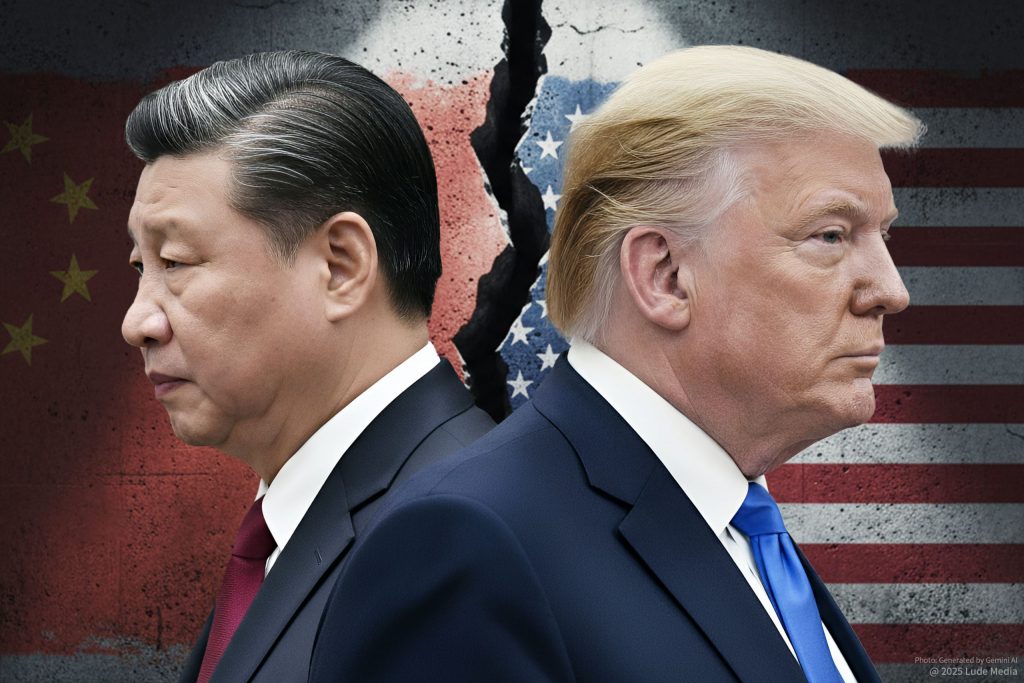
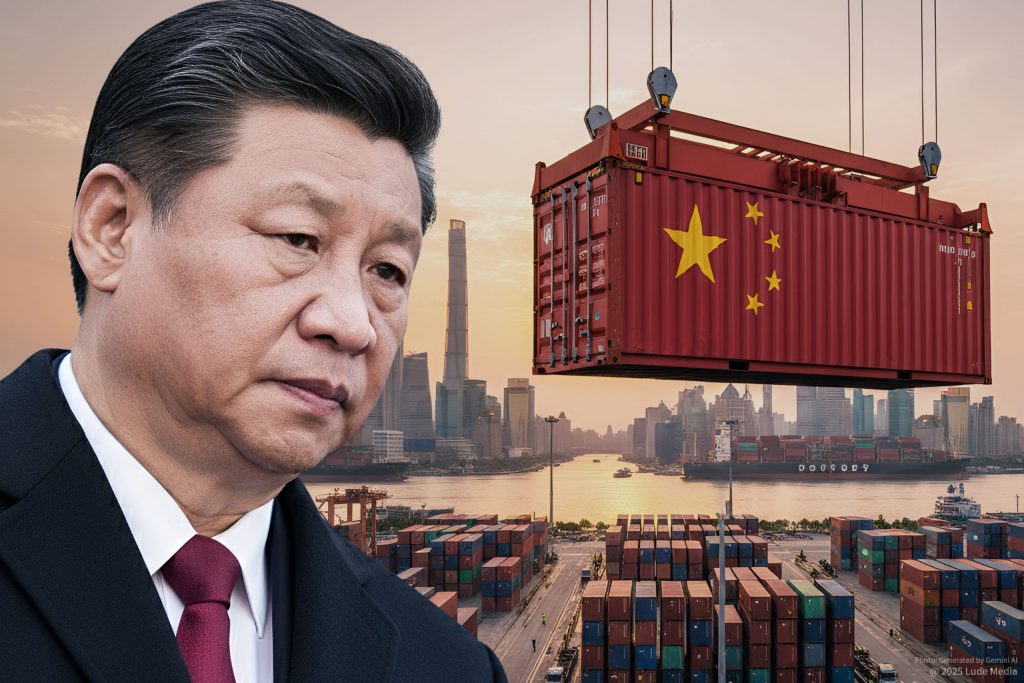
The White House Press Secretary has confirmed: President Trump will meet with Xi Jinping in South Korea on Thursday, October 30.
First, President Trump had repeatedly said he wanted to meet Xi Jinping — but Xi kept avoiding a response.
Then, Trump decided to show Xi some “color.” For example: when Xi refused to buy U.S. soybeans, Trump slapped on another 100% tariff — and Xi still kept his head down.
Next, Trump escalated step by step, including:
Evaluating new export control measures against China — expanding restrictions to cover all overseas products that contain or are made using American software.
Demonstrating how swiftly large-scale sanctions can take effect — on October 22, the U.S. simultaneously sanctioned two major Russian state-owned oil companies.
As of now, no one can say for certain whether Xi will actually show up to meet Trump. But one thing’s sure: if Xi doesn’t go, the outcome will be even more spectacular.
02|The CCP Has Stockpiled 1.25 Billion Barrels of Crude Oil — A Wartime Reserve, Ready for a Final Gamble
The CCP has announced that its four major state-owned oil companies will stop purchasing Russian oil via maritime routes — but no one believes what Beijing says.
In reality, China has been massively hoarding crude oil for months, preparing for potential U.S. sanctions or disruptions in Russian oil supplies.
According to JPMorgan, China added 160 million barrels of crude reserves in 2024 alone, bringing its total stockpile to around 1.25 billion barrels, with projections that it could reach 1.5 billion barrels by 2026. For comparison, the U.S. strategic reserve currently stands at about 831 million barrels.
This shows that the CCP has long been preparing for an energy decoupling, and the current buildup represents a wartime-level reserve. Let’s not forget — Beijing has also been dramatically increasing its gold reserves.
This information is not just a signal to the market — it’s a message to the world: Xi Jinping is preparing for a final confrontation. And if, after his upcoming meeting with Putin, Xi feels humiliated or cornered, he could very well trigger a “regional conflict deterrence” scenario.
03|Under Pressure from Zelensky and the U.S., Europe Is Set to Completely Shift Its China Policy
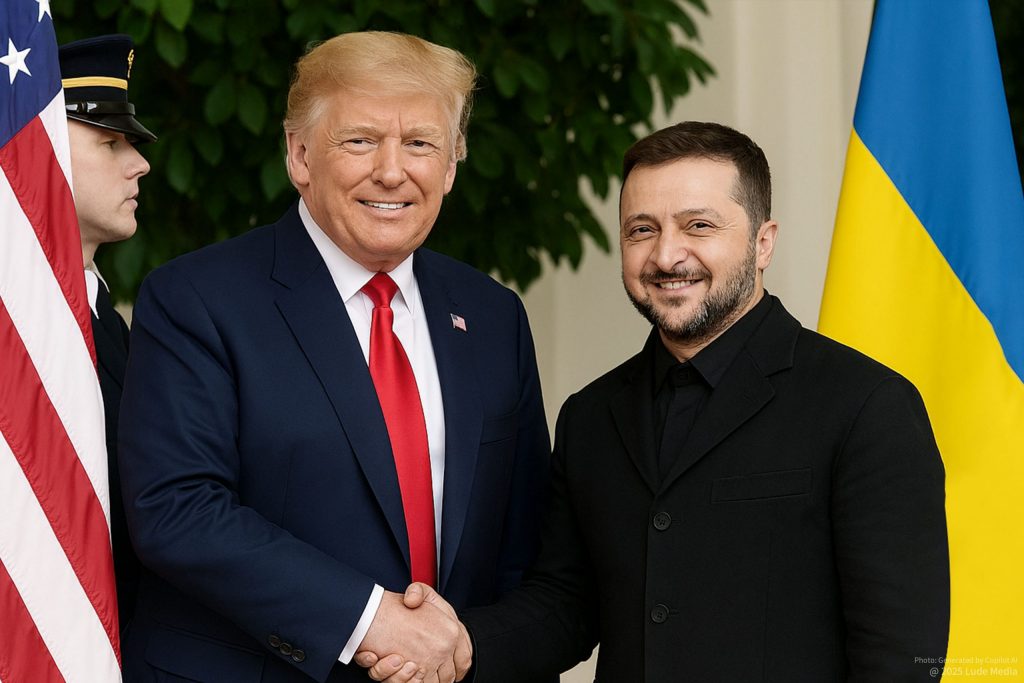
Zelensky stated that Xi Jinping had repeatedly promised not to sell weapons to Russia, yet Beijing has in fact been helping Moscow, not Kyiv.
That’s a sharp accusation. Since President Trump began adjusting U.S. strategic direction, Ukraine has gradually seen things clearly — and its foreign intelligence service has recently been revealing more of China’s real actions.
◉ Zelensky’s key message — “China doesn’t care about our victory or Russia’s defeat” — is meant to tell Europe and the world that:
There is no true ‘no-limits partnership’ between China and Russia;
There is no ‘brotherly friendship’ between China and Ukraine;
The CCP does not love peace;
The CCP seeks maximum self-interest, built upon the failure, infiltration, control, or subjugation of others.
◉ Zelensky’s words now carry heavy weight in Europe, and under joint U.S. and Ukrainian pressure, Europe’s stance toward China is bound to shift:
Europe has long played the game of political correctness — it affects their votes, reputations, and economic interests — which made them hesitant to confront Beijing. But now, with U.S. economic backing and China’s economy faltering, that hesitation is fading.
Zelensky is now the symbol of political correctness in Europe.
European leaders know when to seize the moment — and that moment has arrived.
04|Trump Administration to Review China’s Compliance with the 2020 “Phase One” Trade Deal — Inevitably Tied to COVID-19
The Trump administration is reportedly preparing a Section 301 investigation into whether the Chinese Communist Party (CCP) fulfilled its commitments under the 2020 “Phase One” trade agreement.
◉ In September 2025, Beijing purchased no U.S. soybeans and even stirred unrest among American soybean farmers. During Trump’s meeting with Xi in South Korea — whether behind closed doors or in public — Trump is expected to confront Xi directly on the soybean issue, leaving him embarrassed.
◉ The issue extends beyond missed 2025 purchases. Throughout Trump’s first term, Beijing never truly honored the soybean deal. More importantly, while Xi persuaded Trump to sign the trade pact, he simultaneously unleashed the COVID-19 outbreak.
Trump reportedly knew the virus originated from the Wuhan Institute of Virology’s military-civil fusion lab and was aware of a whistleblower from the University of Hong Kong who revealed that Xi Jinping and Liu He knew at least two weeks before the signing that the virus was uncontrollable and transmissible between humans.
Thus, the administration’s Section 301 review is not merely about trade compliance — it is intertwined with the CCP’s role in the pandemic’s origins.
◉ When Trump said, “I think my meeting with Xi went quite well,” it hinted that he holds strong leverage over Xi — something far beyond what’s publicly known.
Meanwhile, Putin has proactively offered to engage with President Trump on global denuclearization discussions, signaling a major geopolitical shift.
05|For Those Still Unclear About the Current Situation — Look at the Wars President Trump Has Already Settled, the Allies He’s Secured, and Especially Russia’s Response
The Trump administration has sanctioned two major Russian state-owned oil companies, which together account for 60% of Russia’s oil output. Putin’s reaction: “America’s new sanctions will not affect the U.S. economy. Our response will be serious — but we want dialogue.”
Today, Zelensky stated that Ukraine “has never used U.S.-made long-range weapons to strike inside Russia” — instead relying on domestically developed systems. The U.S. has not authorized strikes on Russian territory, which is why Putin publicly called for dialogue, including discussions on global denuclearization. Once Washington and Moscow agree, no one dares defy them — not Iran, not the CCP. Of course, Putin still needs to talk tough for domestic stability.
Putin’s warning that oil sanctions will drive up global prices is mostly posturing. According to Franklin Templeton’s chief economist, U.S. sanctions on Russian oil may raise prices by only 4%–6%, not enough to cause significant inflation. But the losses from sanctions will likely lead Putin to demand compensation from Xi Jinping.
Trump and Putin are certain to meet, and this will not be undermined by the sanctions issue — especially after their shared goal of “U.S.–Russia alignment to defeat the CCP.” As for the Budapest Summit, it may actually be scheduled for November, not October — potentially after Trump’s meeting with Xi Jinping. If both Trump and Putin have individually pressured Xi, then meeting afterward would carry greater strategic weight.
In short, Putin’s tone is cooperative, but Trump will still apply pressure — because Russia’s “double-headed eagle” can never be fully trusted. Yet, the entire global tempo remains firmly in America’s hands.
06|Macron, the Master of Political Winds, Calls for Using the EU’s Strongest Trade Weapon Against China
French President Emmanuel Macron has urged EU leaders to “consider deploying the EU’s most powerful trade instruments” in response to China.
Macron has an exceptional sense for political winds, which is how he’s managed to keep his position even after multiple cabinet collapses and how France still retains some international influence despite its domestic troubles.
Whether Macron’s words will translate into concrete action remains to be seen, but he clearly sees the opportunity in the current anti-CCP momentum — and he’s quick to claim the headlines and public approval first.
However, the real leadership in Europe’s push to counter the CCP lies not in Macron’s rhetoric, but with the British Royal Family, who are actually taking decisive action.
07|Venezuela’s Maduro Turns Fully Toward Russia; Colombia’s Congress Resists Following Petro
◉ Not long ago, Maduro accused the U.S. CIA of plotting a coup in Venezuela and turned to Beijing for help—but the CCP only offered propaganda-level verbal support.
With no real backing, Maduro quickly announced that Venezuela possesses 5,000 Russian-made portable surface-to-air missiles, claiming they could target U.S. forces in the Caribbean, hoping to cling tightly to Russia’s support. But that move will only give the U.S. more justification to eliminate him.
Moscow’s response has been purely diplomatic—a few public statements of support. If Maduro pays, Russia will sell him weapons, but military assistance is out of the question. Once U.S. forces act, the Kremlin will follow its usual script: calling for restraint and condemning U.S. military action—nothing more.
◉ The Colombian House of Representatives has officially designated Maduro’s “Cartel of the Suns” as a transnational narco-terrorist organization and has requested assistance from the United States and Israel to combat the group.
This shows that President Petro holds little real influence within Colombia, and that lawmakers have no intention of becoming cannon fodder by siding with him.
08|Fentanyl will be the top issue at the Trump–Xi meeting; Trump signals a shift to “overland” strikes, that is not limited to Venezuela, and could be broadened with congressional approval
President Trump: “By November 1, tariffs on China will be raised to 157%; fentanyl will be the first topic when I meet with Xi — they will pay a heavy price.”
“Although there are big issues like agricultural products, the very first question I’ll put to him is fentanyl,” Trump said.
Only Lude Media in the Chinese-language sphere has consistently highlighted that Trump’s actions against Venezuela aim at the underlying fentanyl network — which points back to the Xi/CCP regime.
Trump explained that maritime trafficking (“sea shipments”) now accounts for roughly 5% — or less — of flows compared with a year ago. Traffickers have switched to overland routes, and that’s the next target. He said the administration may brief the Senate and Congress to expand the scope of operations, and that it would be difficult for lawmakers to oppose. “I don’t see any legal obstacle,” he added. “I don’t think we’re going to necessarily ask for a declaration of war. I think we’re just going to kill people that are bringing drugs into our country, okay? We’re going to kill them, you know? They’re going to be dead, okay?”
Commentary:
If overland fentanyl flows surge, Congress may indeed need to authorize broader action. And Trump did not limit “overland” strikes to Venezuela alone — he explicitly signaled they could expand. Over the coming days there will be more related developments in Venezuela, which makes it clear that any land-based campaign would aim beyond cartels and toward the true controllers behind the fentanyl networks — namely, the CCP.
09|The Times Reveals CCP’s Large-Scale “Honey-Trap” Infiltration Campaign in Silicon Valley
The Times discloses: China and Russia are waging ‘sex warfare’ to steal Silicon Valley secrets
◉ Elon Musk specifically retweeted The Times story and wrote: “If she’s a 10, you’re an asset 💯 😂.”
That line is a pun: if someone rates a woman a perfect 10, it means you’re 100% a valuable target. The word “asset” is intelligence jargon — it means an intelligence target or asset, often a person. It’s a term used in espionage.
Lude Media long ago reported that Musk was among the new elites courted by Xi’s circle; he was later personally pushed out by President Trump and is now the subject of a U.S. national-security investigation, which is a common topic already.
So Musk’s comment, which sounds like a cold joke, actually signals panic and a cover-up: he’s trying to mask anxiety by turning a serious allegation into a raunchy one-liner. This is a defensive psychological move — a classic technique called “preemptive ridicule.” By making a joke, he attempts to soften and disarm public suspicion: “Yes, I know about this, but I don’t take it seriously — I’m even laughing about it, so don’t suspect me.”
◉ U.S. intelligence officials leaked this story to The Times using deliberately provocative Cold-War language like “Sex Warfare” — wording that’s highly politically incorrect, and especially striking coming from a publication in politically correct Britain. That suggests this is a planned, staged disclosure, timed as part of a larger operation: they’re priming the public and creating space for follow-on actions and media feedback.
The Times piece describes how Chinese and Russian intelligence officers have been running large-scale infiltration campaigns in Silicon Valley using attractive women. It paints a typical scene: at a conference, a Silicon Valley engineer meets a smart, charismatic woman who shows sincere interest in his work. Years later he realizes she was part of a carefully staged intelligence operation aimed at harvesting classified cutting edge technology from the U.S.
It’s not surprising that Russia engages in such operations — first, because U.S.–Russia relations remain frozen, and second, because the Soviet Union had a long history of doing this kind of thing. But the article’s mention of Russia mainly serves to draw attention to the Chinese angle — Beijing’s overseas version of the “Red Army of Women” tactic. This is a signature CCP playbook move: a “Trojan Horse + Long March” infiltration strategy, just like their large-scale southern border infiltrations into the U.S.
Dr. Yan mentioned months ago that young people in Silicon Valley told her it’s now trendy for tech men to date or marry East Asian, especially Chinese women — regardless of money or status. She immediately sensed something was off: the CCP was running a cognitive warfare campaign in Silicon Valley, packaging Chinese women to attract tech talent. Now, the Times exposé confirms exactly that.
The CCP isn’t just using physical attraction — it’s strategically targeting individuals for long-term entanglement, even through marriage and children, to secure lasting “family” ties. U.S. intelligence officials have labeled this strategy “Sex Warfare”, warning that the CCP’s operations now pose an increasingly serious threat to America’s technological dominance. They described it as “terrifying,” since U.S. cultural norms and legal constraints make it difficult to strike back with the same force used against traditional espionage — giving Beijing’s “honey traps” a major asymmetric advantage.
As our insider “Thunder” once said, Wendi Deng herself was a high-ranking operative from the PLA General Staff Department — essentially holding a general-level position. This has always been the CCP’s style. Now, with the use of social media and AI for target profiling, these “Sex Warfare” operations have become more precise and lethal.
The Times article serves as an opening salvo, focusing on intellectual property theft, estimating that the U.S. loses around $600 billion annually, most of it linked to China. Many startups that shared their business plans with Chinese investors later faced IP theft or were pressured to relocate to China. The report concludes that Silicon Valley has become the epicenter of “soft economic espionage” — a kind of modern Wild West gold rush, where the treasure is high-tech secrets.
James Mulvenon called this tactic “drafting” — a strategy where the CCP acquires equity in U.S. startups funded by the Department of Defense, effectively cutting off America’s future access to critical technologies. In his words, it’s like “digging up your future from under your feet.” By buying into or luring away key people, projects, and companies, Beijing quietly undercuts U.S. defense innovation — a covert form of economic and technological warfare.
He emphasizes that Silicon Valley’s open, collaborative culture makes it a magnet for spies, “like moths drawn to a flame.” Economic espionage has now merged with political espionage, blurring the lines between corporate theft and influence operations. The article even cites a Chinese intelligence cell operating in California, reportedly tasked with recruiting local political figures and policymakers.
Because the targets are often startups and young engineers, they tend to have little awareness or caution. The victims may be early-career technical staff involved in sensitive defense work — or even well-established tech leaders — who genuinely believe they’ve found “true love.” Without hard evidence from inside the CCP’s Leninist organizational structure, it’s extremely difficult to label these operations as espionage in legal terms. That’s why the U.S. intelligence community chose to leak this information through The Times — not merely to “raise awareness,” but to prepare the public narrative ahead of a likely wave of enforcement actions. The tone of “concern” is intentional; it sets the stage for targeted crackdowns, arrests, and counterespionage operations already being put in place behind the scenes.
10|Although titled “Sex Warfare,” it’s not purely about seduction — the real focus is psychological infiltration within psychological warfare.
◉ The CCP uses “emotional hubs” such as marriage, family, and childbearing as legitimate covers to bind tech executives, key engineers, and policy influencers into its influence framework.
These agents are professionally trained to manipulate emotion and trust, embedding themselves deeply into the fundamental social unit — the family. Over years of covert integration, they both extract technology and intelligence and shape the target’s perceptions and decisions.
Following the CCP’s operational playbook, such agents inevitably make “family visits” back to China, during which they undergo systematic United Front engagement — tiered interventions by the UFWD, International Liaison Department, or military intelligence, depending on the target’s level of importance. This forms a complete system: For small cases, put on records, and big cases, support and cultivate.
For example, Jeremy Hunt’s wife, Lucia Guo, has been identified as an agent linked to the CCP’s “Unit 817 capacitor” and reportedly had a personal meeting with Li Keqiang during their visit to China. Similarly, CCP operative Fang Fang had targeted U.S. congressman Eric Swalwell, whose family reportedly regarded her favorably, showing how deeply emotional manipulation can blend with political infiltration.
Dr. Yan mentioned in her member program that in the CCP’s secret training manuals for the Guobao (national security agents), the most important part of developing and co-opting covert forces is the use of trust-based relationships. For example, when targeting non-Party ethnic minorities, the approach is to start from early-age emotional connections through the most trusted relationships, while periodically collecting compromising information to maintain control — a strategy of “tight control with measured relaxation.”
Friends in Taiwan should seriously consider how many people there have already been emotionally tied to the CCP’s influence operations.
This has gone far beyond traditional espionage or “honey traps.” It has evolved into psychological and emotional infiltration, even familial co-optation. Don’t forget one of the CCP intelligence system’s long-standing practices: recruiting the next generation from these relationships, selecting promising candidates to be trained as junior agents. In other words, the children of such operatives may be destined from birth to become future agents themselves. That’s why this is extremely inhumane — because from the moment they are born, their life path is predetermined to serve an anti-human regime. This is what truly embodies the CCP’s so-called “Yu Gong Moves the Mountain” spirit — endless generations continuing the same mission.
◉ From a technical perspective, the “Sex Warfare” launched by the CCP is an upgraded version of the traditional honey trap, now evolved into a cognitive warfare tactic.
In psychological terms, this transition from seduction to control is what the CCP calls “long-term psychological programming.” The goal isn’t primarily sexual — it’s about creating a psychological anchor between the target and the operative.
The core method is “mirrored empathy.” Once these agents identify a target, they begin to mimic the target’s values, communication style, and emotional rhythms, making the person feel as if they’ve finally met their “soulmate” — the one they’ve been searching for “a thousand times over.”
Over time, through an emotional relationship, the agent gradually gains control by fostering emotional dependence. The target feels emotionally fulfilled through this connection, while unknowingly providing sensitive information or being subtly influenced toward the desired direction.
This dependence can become so deep that the target’s entire cognition and worldview are reshaped by the operative — the only person who “truly understands” them. The target becomes psychologically enslaved, permanently manipulated, and continuously exploited.
Such tactics are extremely covert, but once exposed, they are devastating at a psychological level — what Chinese intelligence circles call “heart-piercing” (诛心式) operations.
A classic example is the “M. Butterfly” case of the 1970s, when Chinese opera performer Shi Peipu carried out a honey trap against French diplomat Bernard Boursicot — a textbook case of this kind of psychological seduction and control.
It can be seen that if these operations were to be exposed on a large scale, many of the targets themselves would find it extremely difficult to acknowledge or accept the truth — the psychological blow would be devastating.
This is precisely the malicious sophistication of the CCP’s methods — an evolution from the traditional honey trap into a form of cognitive warfare:
psychological dependence → emotional enslavement → distorted decision-making → intelligence leakage.
Unconscious extraction of secrets: Many targets believe they’re simply communicating with a spouse or family member, unaware that confidential information is being subtly drawn out of them.
Engineered trust: Some of these “brilliant wives” leverage connections with institutions like the Chinese Academy of Sciences to help their partners solve technical problems — creating the illusion of a “perfect intellectual soulmate” and reinforcing emotional and professional dependence.
Subconscious obedience: Over time, the targets become conditioned to comply unconsciously — whatever the agent says becomes unquestioned truth.
Guilt and compensation psychology: The operatives induce feelings of guilt or a need for emotional “repayment,” further binding the targets into psychological submission.
From simple sexual enticement to social engineering, the CCP now uses fabricated personas — before targeting someone, they thoroughly research the individual’s background: their personal information, shared conference attendance, public behavior, and even opinions about them gathered from investment circles. Only after this detailed profiling do they move in on the target, treating the entire process — marriage, having children, and building a family — as a long-term intelligence project.
Such operatives must be capable of extreme ruthlessness when necessary. According to Dr. Yan’s personal account, even though she and “Ma Heng” had a genuine emotional bond and came together naturally, he was still expected to poison her when ordered.
These agents follow the CCP’s narrative playbook: they’ll claim the victim suffered from depression, mental illness, or heart problems, and lure them to remote places “to relax by the sea.” If the target lets their guard down, the operation can succeed at any moment. When someone finally sees the agent’s true face — when affection turns instantly into hostility — it’s terrifying. Not everyone is as lucky as Dr. Yan, who managed to escape; many are “naturally” eliminated within the carefully pre-scripted narratives and methods the CCP sets in place.
The CCP has always been this sinister. Back in the Yan’an era, the so‑called “revolutionary partners” were essentially tools for mutual surveillance — they were spouses when needed, and political informants when required to report on each other. This is why every marriage involving a CCP cadre must undergo political vetting — to ensure that the family and future generations are “pure‑blooded revolutionaries.”
Female agents may appear to marry into wealth or achieve success, but internally they live in deep misery. They are ruthlessly exploited, brainwashed, and conditioned into obedience, trained to approach and entrap targets purely to serve the Party and its regime — with no trace of humanity left.
Responses