[Lude Media | Dr. Yan Talks] The CCP’s “Hellfire” Threats Against the U.S. Fall Flat — It’s Too Late to Kneel: Decoupling Accelerates! Trump Administration Reveals China’s 14% Deficit, Comparable to Latin American Debt Crises! 10/15/2025

Video link: https://www.youtube.com/live/qmRob7nraAc?si=eV7L2v8wbtqyGIJX
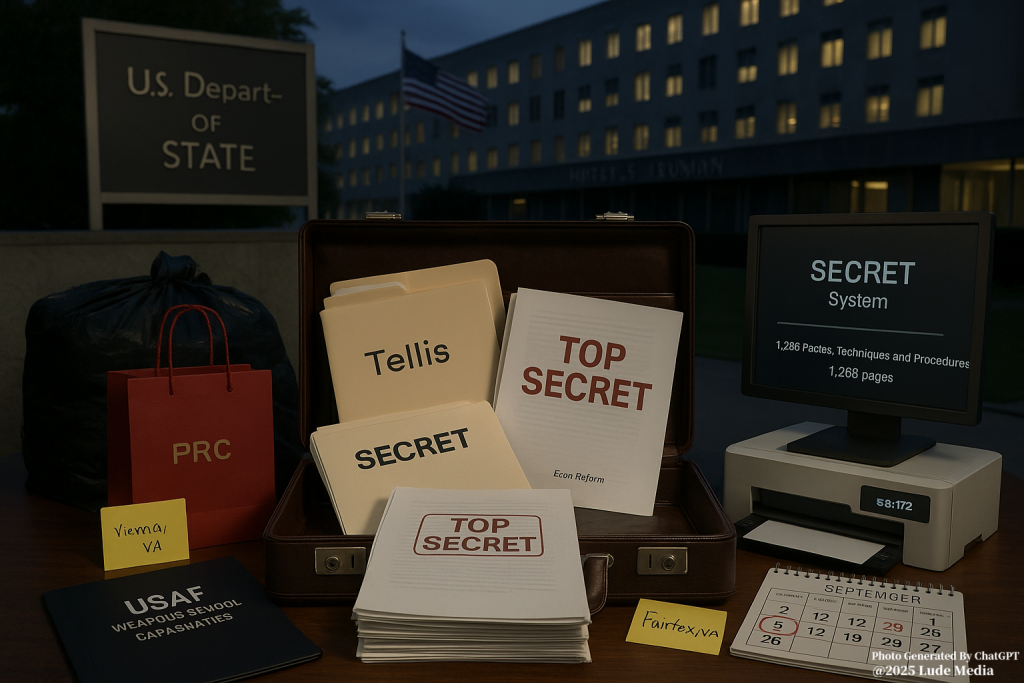
01|Senior State Department Adviser Tellis Arrested: Over 1,000 Pages of Classified Documents Found at His Home; Accused of Multiple Meetings With Chinese Officials
◉The 64-year-old unpaid senior adviser to the State Department, Tellis, has been arrested and charged with unlawful retention of national defense information. According to the Justice Department, if convicted, he faces up to 10 years in prison and a $250,000 fine.
The FBI reportedly found more than 1,000 pages of government documents at his residence, marked “Top Secret” and “Secret.” Court filings indicate that in recent years, Tellis held multiple meetings with officials from the Chinese government.
◉Why did the CCP target Tellis? Because his strategic value to Beijing is extremely high.
Given his background and position, Tellis serves as an intellectual hub within the U.S. strategic and defense establishment.
❶ He serves as a senior fellow at the Carnegie Endowment for International Peace, specializing in Asia and the Indian subcontinent.
The Carnegie Endowment is a core institution within the Democratic Party’s foreign policy circle—known for advocating “engagement with China under rules and frameworks.” Because of this stance, the CCP often seeks endorsements from figures associated with Carnegie. Beijing knows exactly how to infiltrate think tanks. Very few U.S. think tanks are allowed to operate branches inside China, but Carnegie is one of them, with a center based at Tsinghua University. Its researchers frequently attend CCP-hosted forums, making it easy for Beijing to influence or co-opt them.
❷ Tellis, an Indian-American tenured professor, has had direct influence over India’s nuclear policy, the Indo-Pacific security framework, the Quad alliance, and AUKUS. For the CCP, his role is particularly significant—India’s strategic cooperation with the United States is a key concern for Beijing, and insights from someone like Tellis could help the CCP precisely target and weaken the U.S.–India relations.
❸ Tellis also served as an adviser to the Pentagon’s Office of Net Assessment (ONA) — the military’s most elite internal think tank responsible for long-term strategic evaluations. The ONA specializes in comparative “net assessments” of the U.S. and its major adversaries’ military and technological capabilities, typically projecting 20 to 30 years into the future. This means the CCP may have gained access to highly sensitive materials — including long-range U.S. military models, technology assessments, and preliminary resource allocation plans covering the next two to three decades.
❹ During the George W. Bush administration, Tellis served as a strategic planning adviser to the National Security Council. His experience, network, and intelligence connections make him extremely valuable to the CCP. He is deeply familiar with the U.S. internal strategic assessment system and can likely infer how the White House evaluates conflicts involving India, the Taiwan Strait, the Middle East, and other key regions.
❺ Tellis held a Top Secret clearance with access to compartmented information, meaning the CCP could have used him to reach some of the most sensitive U.S. intelligence. This potentially includes: satellite imagery and radar or communications (SIGINT) data; information on weapons systems, tactics, procedures, and military exercise results; as well as cross-agency strategic assessments.
02|Why OAN Is Rushing to Interview Dr. Yan on the CCP–Hamas Issue
OAN’s Fine Point conducted an exclusive interview with Dr. Yan: the discussion focused on how the CCP orchestrated support for Hamas’ October 7 attacks, waged an information war against Israel, and sought to divide the MAGA movement. (Link)
OAN reportedly contacted Dr. Yan after reaching out to multiple sources. Early yesterday morning, they approached her specifically to discuss Hamas and explain how the CCP has been backing it behind the scenes. Interestingly, before contacting Dr. Yan, OAN had already produced a short video, which included a tweet from her two years ago discussing connections between the CCP, Hamas, and Daif.
U.S. actions are generally carried out in a carefully coordinated rhythm, with military and intelligence agencies working in concert.
03|President Trump and U.S. Trade Representative Greer Lay the Groundwork, Accelerating Decoupling!
◉President Trump: “We are already in a trade war with China. You have to understand, they’ve been using tariffs against us.”
In other words, while the U.S. is engaged in a trade war with China, it was the CCP that started it—not America. The U.S. and China are effectively already at war.
◉U.S. Trade Representative Greer:
“China is trying to seize control of the global supply chain, and neither we nor our allies will accept it. We are complying with the Geneva Agreement, but China has violated it and escalated the situation.”
China recently announced major expansions to its export and technology controls. This isn’t just about the U.S.—once implemented, these measures would apply globally. According to Greer, China’s move is an attempt to dominate the global supply chain.
He gave a concrete example: “Any product containing more than 0.1% of minerals mined or processed in China now requires Chinese government approval before it can be traded.”
Greer emphasized that this is not just a bargaining tactic ahead of the APEC Trump-Xi meeting. It’s a premeditated attempt to ambush the U.S. economically.
He directly challenged CCP propaganda claiming the U.S. is in violation or that the Geneva Agreement doesn’t exist: “These are false narratives defending China’s broad and unacceptable actions.”
Regarding the Geneva Agreement: it was publicly released—U.S. tariffs remain low, and rare earths were supposed to flow freely. But China has now expanded its rare earth controls. The U.S. is following the agreement; China is breaking it.
Greer added: “We are in close consultation with our allies. They share the same concerns and are similarly affected.”
The message is clear: the world is poised to respond to China collectively, and decoupling is moving into a substantive phase.
◉President Trump has already stated that for every element China restricts, the U.S. has at least two alternative sources. Now, countries around the world are announcing domestic rare earth discoveries and expressing willingness to cooperate with the U.S.
For example, Turkey recently declared the discovery of the world’s second-largest rare earth deposit.
Comment: Rare earths aren’t really “rare.” The CCP sacrificed environmental and public health interests to dominate the market, thinking they were clever—but other countries have rare earths too, waiting to be developed in cooperation with the U.S.
Decoupling from China is now decisive—there’s no hesitation and no way left for the CCP to retreat.
04|Trump Administration Announces China’s 14% Deficit—Comparable to a “Latin American Debt Country”!
◉U.S. National Economic Council Director Hassett:
“President Xi is up against the most powerful opponent any country has ever faced. Their so-called ‘Chinese-style’ intimidation tactics don’t work at all. We have plenty of leverage to counter them.”
The so-called “Chinese-style” refers to the CCP’s “sewer mindset.” Their intimidation tactics don’t work in the U.S.—but what matters is that America’s countermeasures do work against the CCP.
◉U.S. National Economic Council Director Hassett revealed for the first time: China’s current deficit is roughly 14% of GDP, making them comparable to a Latin American country at risk of a debt crisis.
This figure and conclusion are highly significant—Beijing would never dare to mention it in domestic propaganda.
Hassett, Director of the National Economic Council, reports directly to President Trump and serves as the central hub of Trump’s economic warfare strategy, coordinating inter-department issues involving the Treasury, U.S. Trade Representative, Commerce Department, Energy Department, and the defense-industrial base. He functions like a chief of staff for economic operations, providing Trump with the logic and strategy for fiscal and monetary campaigns.
Hassett’s main areas of expertise include: macro fiscal policy and international capital flows, modeling responses to debt crises, and analyzing debt collapse cycles in Latin America.
President Trump is the decision-maker, while these three serve as the three pillars of his economic warfare strategy:
Tariffs and Trade Defense – Greer: Responsible for implementing policies and laws on tariffs, rare earths, and supply chain decoupling from China, as well as managing external negotiation messaging.
Monetary and Capital Dominance – Bessent: Oversees financial sanctions, SWIFT, the extension of U.S. dollar supremacy, and the “re-armament” of economic leverage.
Economic and Debt Countermeasures – Hassett: Uses economic structures and financial data to expose the CCP’s economic falsehoods and counter their fiscal narratives.
◉By revealing that China’s deficit amounts to 14% of GDP, Hassett is signaling to the world that China is on the brink of collapse—essentially like a Latin American country facing a debt crisis. China is now a major source of global financial instability.
Previously, Trump said China was close to collapse, and Bessent noted its economic fragility. Now Hassett is putting numbers on the table.
Hassett emphasizes that the U.S. controls the strategic leverage in this economic game—showing that the initiative in decoupling rests with America, supported by structural advantages in tariffs, supply chain restructuring, and coordinated fiscal and monetary measures.
Labeling China as a “Latin American debt country” is striking: it signals risk, makes investment unattractive, and underscores the need to de-risk U.S. Treasury holdings. If China were to sell off U.S. debt, it would actually play into America’s hands.
◉China’s fiscal deficit at 14% of GDP is highly significant. Here’s what it implies:
Under 3% │ Healthy – examples: U.S., Germany.
Over 5% │ Warning level – indicates the government is already borrowing to stay afloat.
Over 10% │ Severe imbalance – signals potential fiscal loss of control, currency depreciation, and capital flight.
China’s deficit at 14% of GDP directly signals to the world that its fiscal system is not only severely imbalanced but at a level comparable to pre-crisis Venezuela or Argentina. China is no longer an economic growth engine—it’s a financial time bomb.
While the CCP claims, using its manipulated data, that its deficit is only 2–3%, the U.S. figure is based on rigorous analysis, including: local government bond issuance, monitoring of foreign exchange outflows, and discrepancies in energy and infrastructure material procurement.
Currently, China’s economy is propped up by a credit bubble; it has long been heavily indebted and rolling its obligations like a snowball.
China’s total tax revenue is about 18% of GDP, and with a 14% deficit, this means that over three-quarters of annual tax revenue is going toward debt repayment. The government’s income isn’t even enough to cover interest payments, putting the fiscal system into a self-consuming, unsustainable stage.
For comparison:
2001, Argentina: Deficit at 10–12% of GDP during its default.
1986, Brazil: Deficit at 9–10% of GDP during its debt crisis and currency collapse.
2014, Venezuela: Deficit at 14–15% of GDP when its currency collapsed.
China’s current 14% deficit puts it in the same range as nations on the brink of financial collapse.
China’s deficit ratio is similar to those of Latin American countries at times of crisis, but its situation is actually worse:
Government reset is impossible: Latin American countries can collapse and replace their governments—e.g., Argentina swapped in the Milei administration and the economy quickly improved. China’s system is different: it will never allow a government reset, yet it also cannot revive itself.
Exchange rate rigidity: Latin American economies could adopt floating exchange rates, allowing gradual economic recovery. China, however, forcibly maintains its exchange rate, manipulating it to avoid collapse. Once a crash occurs, it would trigger a systemic financial earthquake, and China must prop up the system until the very last moment.
Debt structure and scale: China’s debt is far more alarming. U.S. estimates indicate that combined government, corporate, and household debt in China exceeds three times GDP. By contrast, when Argentina or Brazil collapsed, their debt was only around 60–70% of GDP and largely external. Defaults could be managed through negotiations and currency resets. China’s debt, however, is internally recycled, with mutual lending and borrowing, leaving no one able to bail out anyone else.
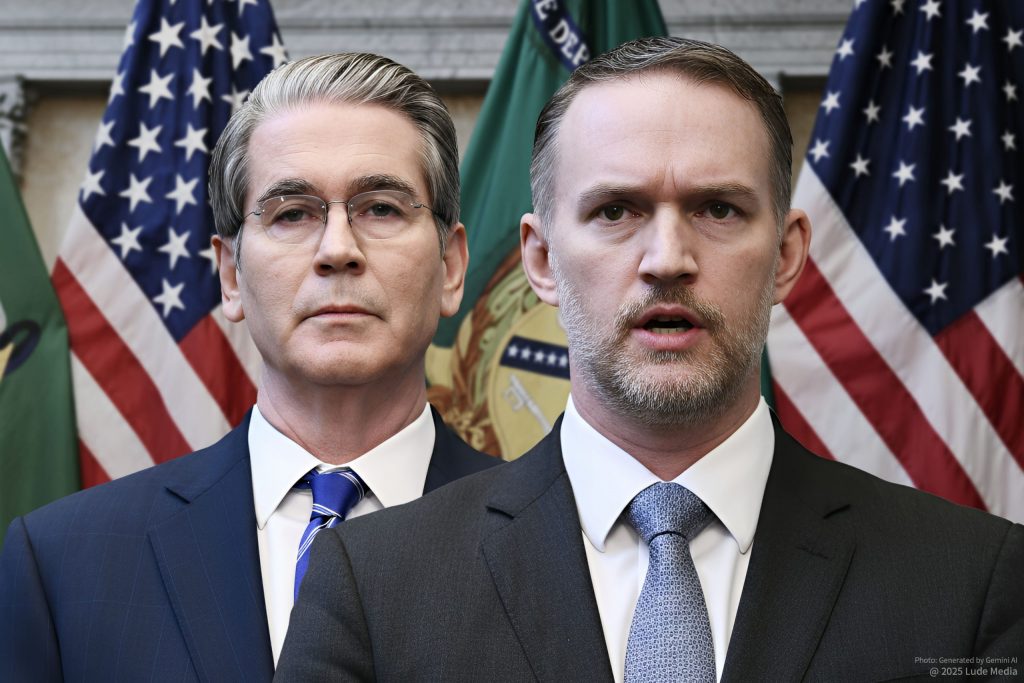
05|Bessent Reveals CCP Threatened the U.S. With “Hellfire”—Describes It as Completely “Deranged”
◉ “ This is China versus the world. If China wants to be an unreliable partner to the world, then the world will have to decouple”
◉ “this is China versus the world. We’re going to be speaking with our European allies, with Australia, with Canada, with India and the Asian democracies. And we’re going to have a fulsome group response to this”
Key takeaways:
The world is forced to decouple from China; we are all your friends, but you’ve gone too far.
It’s the CCP that is opposing the world, imposing unacceptable export controls globally.
Photos from Ukraine will soon be released showing that many Russian drones contain Chinese components.
If China tries to use economic coercion to slow global growth, its own economy will suffer the most.
Calls to suspend World Bank support for China and cancel 45% of climate synergy financing targets.
If China attempts to use stock market turmoil to pressure the U.S., it will fail; America will not change its trade stance due to market drops. The CCP’s repeated “stock market weaponization” is now ineffective.
CCP “low-level official” Li Chenggang is described as deranged, threatening the U.S. and the world with “pushing the global system into chaos” and “America facing hellfire.”
The term “hellfire” carries religious connotations, unusual in Chinese-language expression. It’s the kind of rhetoric used by figures like Khamenei or Hamas. The CCP uses it to signal a serious threat to the U.S.—ordinary Chinese phrasing wouldn’t convey the same gravity.
To U.S. military intelligence, “hellfire” evokes Hellfire missiles.
To civilian officials, it evokes divine punishment.
This simultaneously touches the U.S. military and cultural red lines, making the CCP appear deranged and signaling extreme religious-style violence. Essentially, it’s akin to an official Chinese declaration of intent to strike the U.S., potentially raising concerns of nuclear threat.
06|Sidebar: Latest Update on Guo Wengui
According to sources close to Guo Wengui, he reportedly told them that in the detention center, his cellmates are overly affectionate—every night before bed, they take turns hugging him and saying “goodnight.”
Comment: Imagine the scene—being hugged goodnight every evening by a rotating cast of cellmates. No wonder Guo’s teeth are nearly all gone.
Responses