[Lude Press | Dr. Yan Talks] Trump: “If you go back 1000 years, it has never worked once.” | Under the shadow of the CCP, the UK government hastily advances the Chagos Sovereignty Bill. 10/21/2025

Video link: https://www.youtube.com/live/HqLtlhZXkaQ?si=5B176HaMvcodpRfw
01|The White House and the War Department are going all out — what does “Your mom” mean in English?
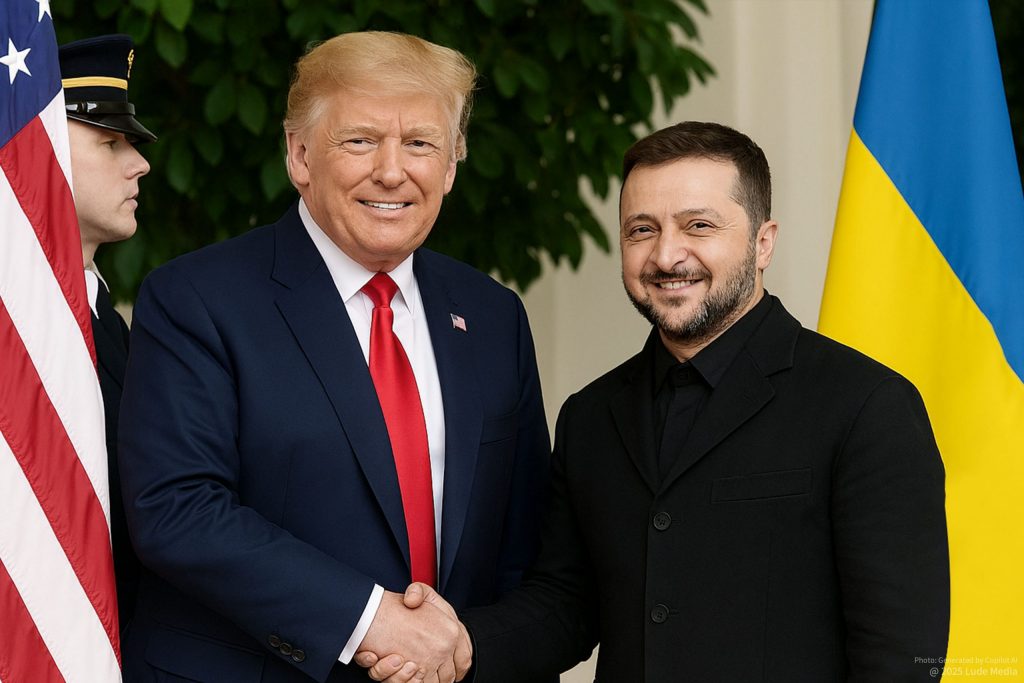
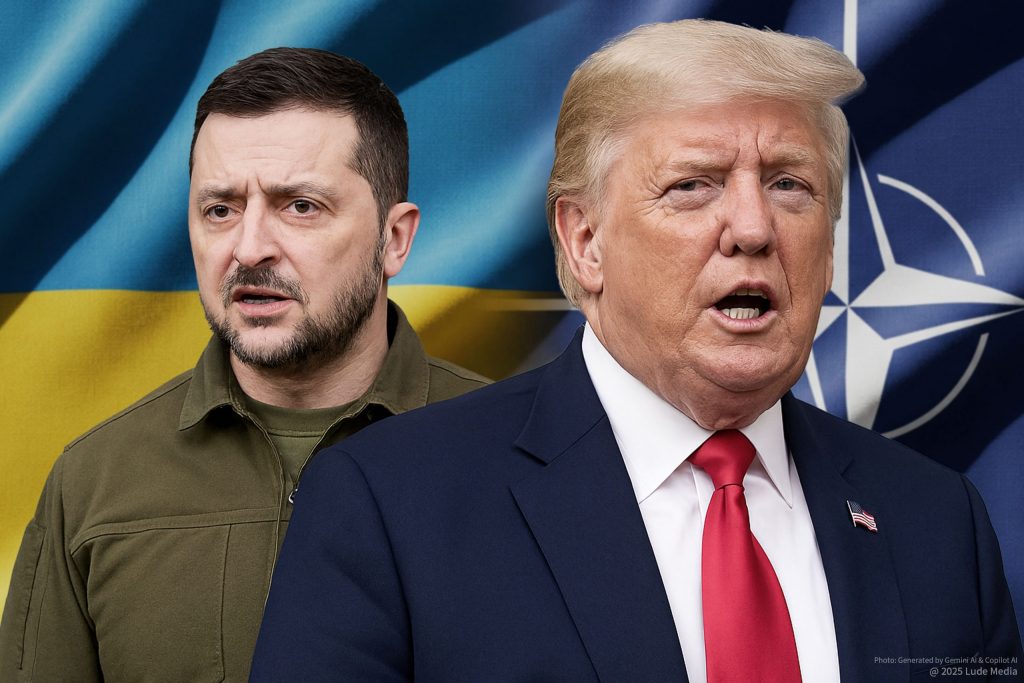
▪︎ During the meeting between President Trump and President Zelensky, Secretary of War Hagueseth wore a tie with red, white, and blue stripes. Because the colors resembled the Russian flag, the Russian state news agency praised it.
When The Huffington Post asked Hagueseth whether he knew about the Russian comments or had worn that tie before, Pentagon spokesperson Parnell replied:
“Your mom bought it for him — and it’s a patriotic American tie, moron.”
▪︎ When a Huffington Post reporter asked, “Who came up with the idea to hold the meeting in Budapest?”
White House Press Secretary Karoline Leavitt responded:
“Your mom did.”
Later, the reporter also received the same one-line reply from White House Communications Director Steven Cheung:
“Your mom.”
◉ In English, phrases like “your mom” or “ask your mom” are not the same as how Chinese internet trolls use “your mother” as a vulgar insult. The Chinese-language context often connects “mom” with profanity or personal attacks, but in English it’s completely different.
First of all, The Huffington Post is very left-leaning.
Second, expressions like “your mom” or “ask your mom” are common slang in the U.S. military — a casual way of brushing something off when they think it’s not worth their attention.
So when Trump’s administration uses these phrases, it basically means:
“Don’t lecture me about political correctness. You people hide behind it and don’t get real work done. I’m not wasting time on you.”
Criticizing Secretary Hagueseth’s tie is just ridiculous — red, white, and blue are the colors of many national flags, including the United States. Does that automatically make it “Russian”? Should every shade of red in the world be considered “Communist China”? That’s why they didn’t even bother responding seriously — it’s too trivial.
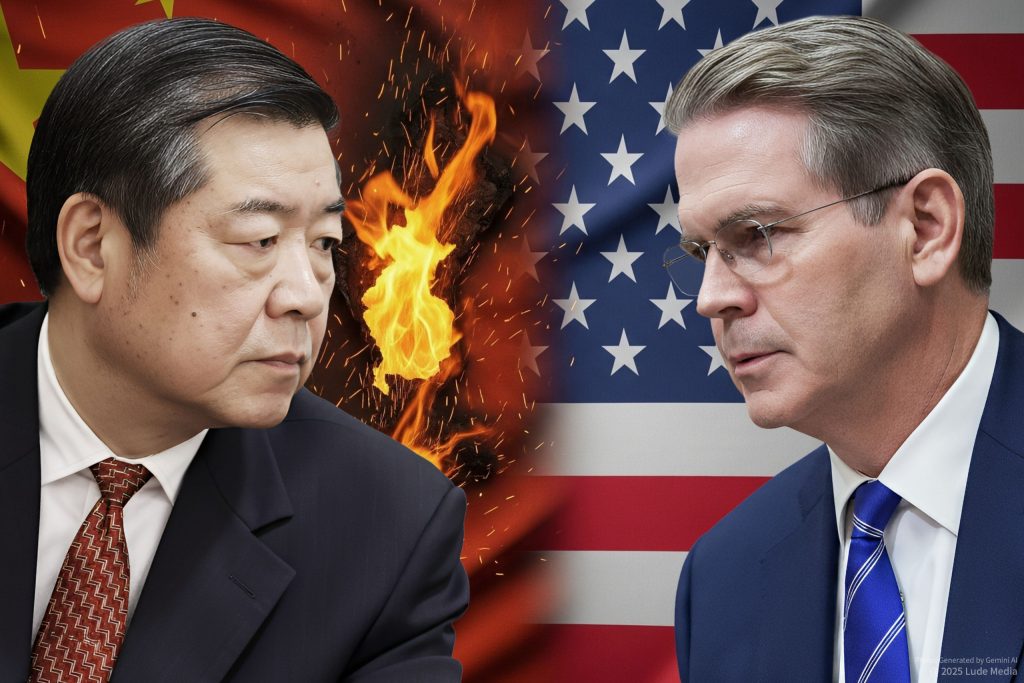
02|Trump said today: “Maybe Meeting Won’t Happen with Xi. I Want Xi to Have a Good Deal For China”
◉ Dr. Yan has long said that Xi Jinping probably doesn’t dare to meet Trump in South Korea.
The South Korean side has been trying to cover for Beijing, saying the meeting might not happen “due to scheduling issues.” But in reality, Xi is caught in a dilemma — afraid to go, but even more afraid not to go.
Just imagine: if Xi really sits down with Trump, how could he possibly respond — in front of the world’s leaders and media — when Trump brings up fentanyl exports, weaponizing rare earths, supporting Russia, cultivating Hamas, or creating and releasing COVID-19? Does Xi have a script ready for those?
This is a classic Trump-style psychological dilemma — a no-win situation for his opponent. Whether Xi goes or refuses to go, he loses either way.
◉Trump also said, “We Built China’s Military With All Money We Lost”
Commentary:
Trump normally didn’t link tariffs directly to military power or weapons before. By saying this, he’s explicitly tying U.S. economic losses to the strengthening of the CCP’s military. That’s not just pressure in the court of public opinion — it’s being escalated to a battlefield framing. His message to Xi is: if you don’t cooperate, these negotiations will break down, and you shouldn’t be surprised if we respond forcefully for all the years you used our money to build an army aimed at defeating us.
Trump has effectively turned trade talks into a declaration of preparation for conflict. Legally and rhetorically, he’s shifting this into a defense posture backed by the commander-in-chief’s authority — framing a future response as a morally justified act of vengeance. This is the same level of rhetorical framing as George W. Bush invoking the symbolic attack on our freedoms after 9/11.
03|The CCP’s Typical Tactics in the Information and Propaganda War: Taking Things Out of Context and Evading the Core Issues
◉ Some media outlets under CCP influence, like RFI, actually misinterpreted Trump’s words, claiming “Trump expressed doubt that China might invade Taiwan.” What Trump actually meant was that Xi, if you’ve got any sense, you look at our military strength, you won’t touch Taiwan. I see you haven’t gone crazy like Li Chenggang yet, so I believe you won’t act against Taiwan.
◉ Another group of media deliberately downplays the core issue, using headlines like “Trump Announces Early 2026 Visit to China.” But look closely—Trump never actually confirmed a visit. It’s just months ago when he leveraged Xi’s “soft spot,” Xi’s daughter, to get Xi to take a call—Xi only offered a polite remark. Think about it: Xi doesn’t even dare to meet Trump in South Korea, so would he really invite Trump to China? Trump merely went along, saying, “I received an invitation to visit China, possibly early next year.” Yet the CCP and CCP-influenced foreign media spin this into headlines like: “Chairman Xi strikes again” or “Sino-US relations warming up.”
04|The CCP is playing its next “dirty card” — weaponizing pharmaceutical raw materials
The Financial Times has once again floated a narrative favorable to the CCP, claiming that Trump doesn’t dare discuss tariffs with Xi because China’s rare earth controls are already taking effect. The CCP supposedly has another “trump card”: pharmaceutical raw materials. If China were to use this leverage against the U.S., it would be catastrophic for America.
Commentary: The pharmaceutical raw materials issue has been on the U.S. radar since the COVID-19 pandemic, and preparations have long been underway. Just as the U.S. and its allies quickly had countermeasures ready for China’s “weaponization of rare earths,” any attempt by China to weaponize pharmaceutical supplies would backfire. Not only would China lose yet another pillar of its already fragile economy, but it would also amplify concerns linking COVID-19 to potential biological weapon scenarios. Let’s wait and see.
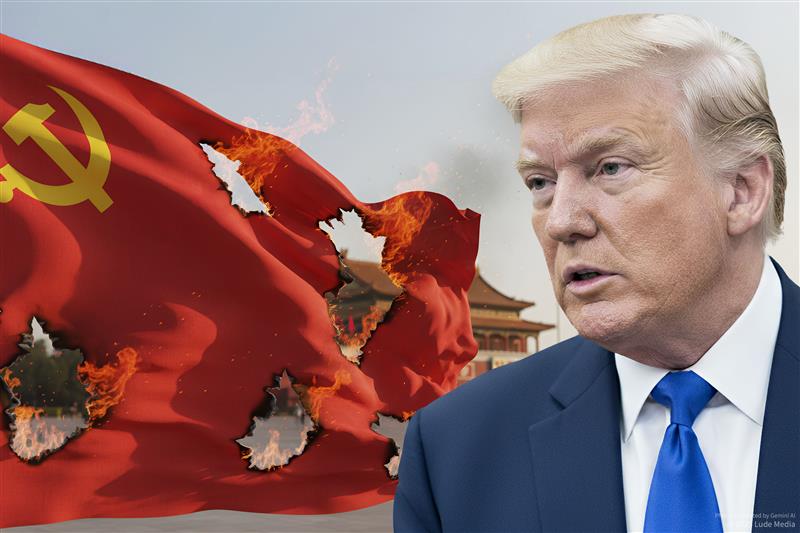
05|President Trump: Communism has been a failure for a thousand years! The Chinese Communist Party is just waiting to be sent back to its original form.
President Trump: “If you go back 1000 years, it has never worked once.”
The Congressional-Executive Commission on China John Moolenaar:”China has run the same playbook for decades—subsidies, unfair trade practices, and hollow promises. It’s time to revoke their “normal” trade status and impose strong tariffs on critical sectors. Free trade is for free nations, not the CCP.”
Commentary: If China’s “normal” trade status is revoked, it’s essentially full decoupling, and high tariffs on key industries prevent China from shifting or laundering production. The CCP has always been a dictatorship and anti-American; the U.S. has given decades of leeway, and now it’s time to strike back decisively. Trump’s point: communism isn’t uniquely invented by the CCP—after a thousand years of attempts, it has never worked, so the CCP is destined to fail as well.
06|The CCP’s use of the BBC is another example of its infiltration of British national institutions.
The UK communications regulator has released the results of its investigation, determining that a BBC documentary about Gaza violated broadcasting regulations.
Broadcasting regulation: Factual programs must not materially mislead viewers.
In the documentary, the narration is delivered by a child—but the child’s father is a senior Hamas official. This is clearly misleading.
◉ Putting aside all the harmful things BBC did during the COVID years, the “817 Capacitor” hasn’t been idle there either.
Note: The codename “817 Capacitor” has two roles:
One is at Downing Street, Guo Yali, the wife of former Chancellor Jeremy Hunt.
The other is at the BBC, serving the Chinese Communist Party’s narrative.
This also shows that such activities serving the CCP’s cognitive warfare are consistently traceable and verifiable.
◉ Why does BBC have such “reckless confidence”?
The BBC holds a special legal status in the UK and enjoys certain exemptions within the regulatory system.
Unlike commercial media like FOX or CNN, the BBC is a public corporate body under the Royal Charter. Its funding comes from the compulsory TV license fee, and it is overseen by both the Department for Digital, Culture, Media and Sport (DCMS) and Ofcom (the communications regulator).
While Ofcom can determine that the BBC has violated rules based on evidence and require corrections or public statements, it cannot impose financial penalties or revoke its license.
Because the BBC is part of a state-related institution, the CCP’s use of the BBC represents another instance of infiltrating UK state institutions, and through this process, it has thoroughly studied vulnerabilities in the UK system.
The BBC has long leaned toward left-wing humanitarian narratives, even referring to Hamas not as “terrorists” but as a “militia organization.”
◉ In July 2020, after Dr. Yan’s interview aired on FOX, the BBC contacted her, saying they wanted to do a 20–30 minute interview and broadcast it live on Morning News, a program available across all Commonwealth countries.
In the end, FOX’s interview—though delayed for a month under CCP pressure—was still aired; but on the BBC’s side, the morning of the scheduled interview, they completely disappeared—no one could be reached, as if they had vanished.
In September 2020, the episode of Loose Women that featured Dr. Yan saw its viewership skyrocket. The production team was thrilled and scheduled a follow-up interview two weeks later. Yet the day before the interview, the staff suddenly called Dr. Yan to cancel, nervously saying: “We’re under lockdown now—we can’t say much.” In reality, the CCP was furious and had pressured them into calling it off.
◉ For now, the BBC has only been accused of “misleading” the public—just required to issue a statement. This shows the UK government is still trying to downplay and defuse the issue, minimizing a systemic national security loophole. From the Scottish wind power project, to espionage cases, to the “super-embassy,” and even the media—each layer is increasingly overshadowed by the CCP’s influence.
However, there are already signs of higher-level, covert investigations—those involving national security and MI5. In August this year, MI5 expanded the scope of the Foreign Agents Registration Scheme to include influence through media on public perception. Such indirect activities are now classified as “foreign agent” actions. The BBC’s production teams are now required to report the origins of any external consultants. All of this bears the hallmarks of preliminary coordination for intelligence operations.
07|Under the CCP’s Shadow, the UK Government Rushes to Push Forward the Chagos Sovereignty Bill
The UK House of Commons has voted to approve Prime Minister Starmer’s plan to transfer ownership of the Chagos Archipelago to Mauritius.
◉ The UK will retain use of one island—Diego Garcia—under a 99-year lease, with the government paying a total of £30 billion in rent. Diego Garcia hosts a joint US-UK military base, including B-2 bombers. Its location is of significant strategic importance, particularly with respect to China’s interests in Xinjiang.
This seemingly “cost-effective” agreement is deeply problematic!
Both the Conservative and Reform parties have called it a “surrender deal” that endangers national security; even MPs of Chagossian descent have opposed it, saying the islands were handed over to Mauritius without consulting them.
The issue goes far beyond Diego Garcia itself — the bill abolishes the existing administrative status of the British Indian Ocean Territory (BIOT).
What’s more concerning is the strong Chinese influence behind it:
❶ China is currently negotiating with Mauritius to lease Peros Banhos Island, located near Diego Garcia.
❷ The proposal was orchestrated by National Security Adviser Tim Powell, the same official behind the “spy case withdrawal,” effectively selling out national interests to China.
❸ China has deeply infiltrated and economically bound Mauritius — it is Mauritius’s largest investor, with Chinese “overseas police stations,” “smart city/port” projects, submarine cable landing sites, and digital finance zones already established there.
❹ China Communications Construction Company (CCCC) has already secured contracts to build ports and logistics centers on multiple small islands near Diego Garcia.
◉ The transfer of sovereignty over the Chagos Archipelago to Mauritius and the resulting security risks for Diego Garcia
The bill has already passed the House of Commons. If it also passes the House of Lords and receives the King’s signature, sovereignty over the archipelago will officially belong to Mauritius. This means the UK’s legal jurisdiction, intelligence-gathering authority, and oversight priority over the territory will all be weakened.
Such a change in sovereignty and ultimate control alters the legal tools related to emergency response and power structures.
Even though the British government claims the legislation will still safeguard the security of Diego Garcia, once Mauritius gains sovereignty, China can immediately establish a permanent “economic and technical” foothold within 120 kilometers of Diego Garcia — under the guise of civilian projects. These “civilian” deployments could include surveillance sites, submarine cable landing stations, airfields, and ports, all of which would threaten the U.S.–U.K. joint base there.
China’s deployments typically disguise Beidou navigation nodes and underwater cable monitoring systems as commercial infrastructure.
Beijing’s strategic goal is to complete an Indian Ocean surveillance triangle:
Djibouti ➡️ Maldives ➡️ Mauritius.
This is fundamentally a geopolitical, security, and intelligence struggle.
◉ The Starmer government is pushing the Chagos sovereignty transfer in a highly suspicious and rushed manner — in its leadership, timing, and procedural approach.
The Starmer administration deliberately bypassed the usual national defense and intelligence assessment processes, while its public narrative downplays and conceals the U.S.–U.K. security implications.
The bill was forcibly advanced in a short time under the pretext of “restoring diplomatic legacy,” something unprecedented in modern British political history.
Its content and timing align closely with the interests of the Chinese Communist Party, suggesting external influence and internal coordination behind the move.
◉ The pace of the Chagos sovereignty handover has been unusually fast — raising deep concern over transparency and motives.
▪︎ Nov 2024: Mauritius proposed resolving the “historical issue.”
▪︎ Jan 2025 (less than two months later): The U.K. Foreign Office had already reached a preliminary agreement — with no parliamentary inquiry records. The “briefing” was orchestrated by National Security Adviser Tim Powell, known for pro-China stances, and only a short “summary” was provided to the Foreign Affairs Committee.
▪︎ May 2025: The U.K. government formally signed the agreement, less than one month after Starmer’s visit to Beijing. The key architects — Starmer, Powell, and the Deputy Foreign Minister — had all recently visited China.
▪︎ Oct 2025: The government rushed the bill through the House of Commons, without an independent National Security Committee report or public consultation with the Chagossian community. The House of Lords has yet to review it, yet the Commons was forced to vote immediately — and passed it.
This compressed timeline, combined with opaque procedures and Beijing-linked diplomacy, makes the entire process look politically driven and aligned with Chinese strategic interests, rather than a genuine act of “historical justice.”
◉ Under normal circumstances, any handover involving overseas territories, military bases, or allied defense treaties must undergo a four-tier national security review process:
Defense Ministry ➡️ Foreign Office ➡️ Joint Intelligence Committee ➡️ Privy Council.
The standard review cycle is 12–24 months, yet the Starmer government completed the entire process in less than one-quarter of that time.
▪︎ Stephen Doughty, the Minister for Asia and Africa, has long advocated “pragmatic cooperation with China.” In April 2025, he attended the China-Africa Blue Partnership Conference — hosted by the CCP’s Foreign Ministry and regularly featuring Chinese special envoys.
▪︎ Prime Minister Keir Starmer, an ultra-left advocate of “renewing Afro-Asian partnerships,” met with Wang Yi in October 2024; within a month, Mauritius raised the sovereignty issue. Then, after Starmer’s April 2025 visit to Beijing, the U.K. signed the sovereignty agreement with Mauritius in May — only weeks later. Starmer also became the first British party leader to hold closed-door talks at a CCP Party School, a level of engagement highly unusual for a Western democratic leader.
In short, the Chagos Sovereignty Bill was not the product of a multi-agency, transparent process. It was a centralized, expedited, and politically motivated operation that bypassed all national security assessments.
08|Can the U.S. and U.K. still save the Chagos Sovereignty Bill?
◉ The U.K. still has some leeway regarding the House of Commons–passed bill:
Can it pass the House of Lords? The opposition can apply pressure or propose blocking amendments—this is the most direct route.
Motions can be raised citing national defense and intelligence impact, demanding a national security assessment and parliamentary satisfaction before enactment.
The Chagossian community opposes the bill and can demand consultation, affecting its legitimacy.
Judicial and national security avenues still offer some obstacles.
For the already heavily penetrated U.K., these conventional methods may not be fully reliable.
◉ What can the U.S. do?
The fact that this issue is widely discussed in the media indicates U.S. pressure.
The U.S. must safeguard its military rights and operational control over the Diego Garcia base, potentially involving congressional review and funding conditions. Congress can scrutinize any significant provisions or payments related to the base.
The U.S. can also exert influence via the UK-US intelligence-sharing and security agreements, alongside public and media pressure.
◉ U.K. Royal Authority to Intervene
Whether it’s the Scottish wind power project, the London “super embassy,” or the Chagos sovereignty bill, all can be handled under the “Royal Prerogative.” The King can use this “restrictive power” to delay approval, withhold assent, or demand security compliance.
The first of the three Royal Prerogative powers allows refusal to sign bills that harm national interests. Although unused for over 300 years, any legislation involving national security, military, territorial sovereignty, or conflicts with allied treaties must undergo a “royal assent” pre-review before parliamentary votes—even if symbolically.
The Chagos bill perfectly meets all these criteria, falling under the scope of the Royal Prerogative. It also touches on U.K.–U.S. defense confidentiality clauses, triggering the pre-review mechanism.
Signals now point to royal intervention. Since this past summer, King Charles has resumed receiving defense and intelligence briefings and attends monthly Privy Council military committee sessions—coinciding with Trump’s visit to the U.K. Despite his cancer, King Charles has taken significant actions regarding the revival of royal authority and U.K. national security.
09|The U.S. Has Already Begun Quietly Assisting in the Defense of U.K. National Security
Earlier this year, King Charles invited Donald Trump to visit the U.K. and received him with unprecedented honors—signaling that the King has realized Britain’s royal authority has been almost completely hollowed out from within, like “a weasel stealing chickens.” Similar to how the President of Indonesia sought Trump’s help, the King is appealing to the United States to jointly stabilize U.K. national security and the global order.
Another telling detail: in recent British media reports on the Chagos sovereignty bill, much of the terminology used comes from American intelligence jargon rather than the typical phrasing used by British intelligence agencies.


Responses