[Lude Press | Dr. Yan Talks] The U.S. and Israel steadily advance the Gaza agreement; Xi’s plan for Hamas’ war of delay collapses; what’s behind the withdrawal of the U.K. espionage case and its link to Cai Qi? 10/4/2025

Video link: https://www.youtube.com/live/N4Ayr67-czs
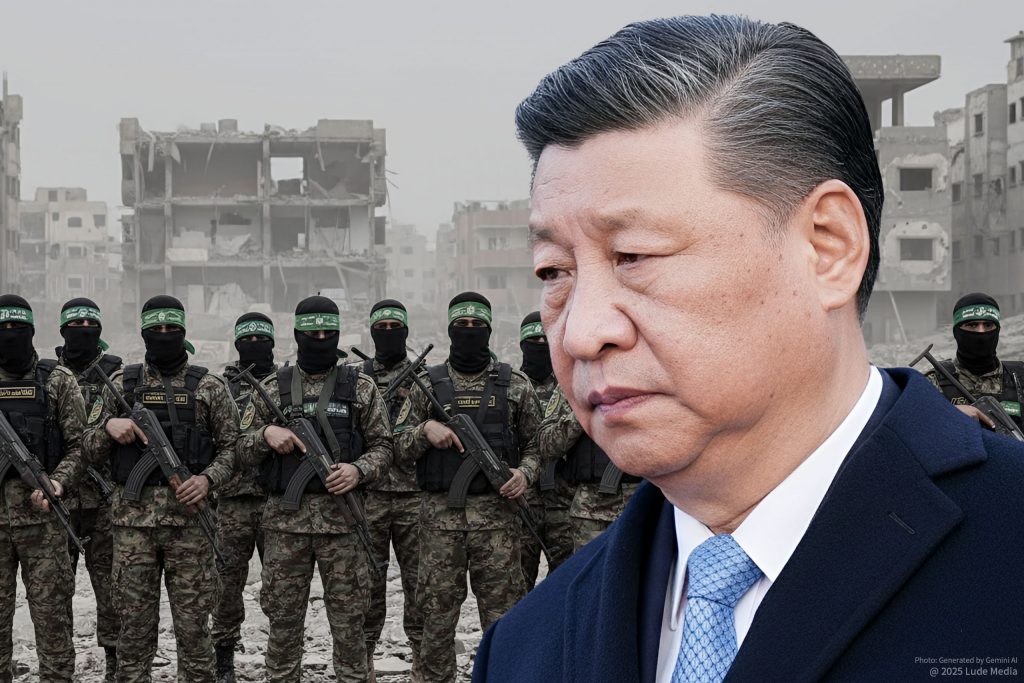
01|The CCP planned for Hamas to keep fighting a delaying war.
China’s official Xinhua News Agency even helped Hamas “interpret” how it should respond to the 20-point proposal.
❶ Hamas agrees to release hostages and remains, but only after Israel halts fire.
❷ On “demilitarization,” Hamas disagrees — it would hand over heavy weapons to Palestinian authorities for safekeeping but insists on keeping light weapons for itself.
❸ Using excuses such as “unrealistic” or “need to discuss details,” Hamas continues a war of delay — trading time for space.
Hamas is essentially copying the CCP’s playbook: brainwashing and agitation, cognitive warfare, creating cannon fodder, internal purges, and a structure of state terrorism.
02|The U.S. and Israel are steadily advancing, giving no room for CCP–Hamas delays
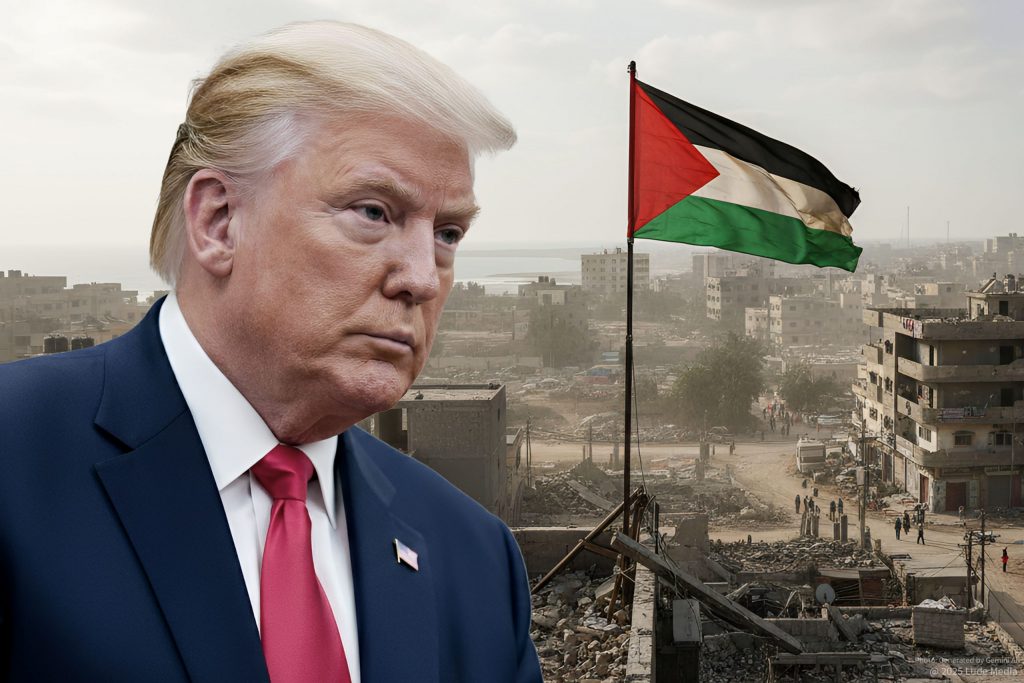
While all sides were preparing for talks — seemingly giving Hamas more time — President Trump posted on Truth Social, making clear he would not tolerate stalling.
◉ President Trump: “Once Hamas confirms, the ceasefire will take immediate effect, and the hostage–prisoner exchange will begin.”
This is a firm deadline — a final ultimatum — similar to the 60-day limit he once gave Iran.
◉ Co-chair of Israel’s bipartisan “Abraham Accords” parliamentary group: “Hamas will not agree to any of President Trump’s proposals.”
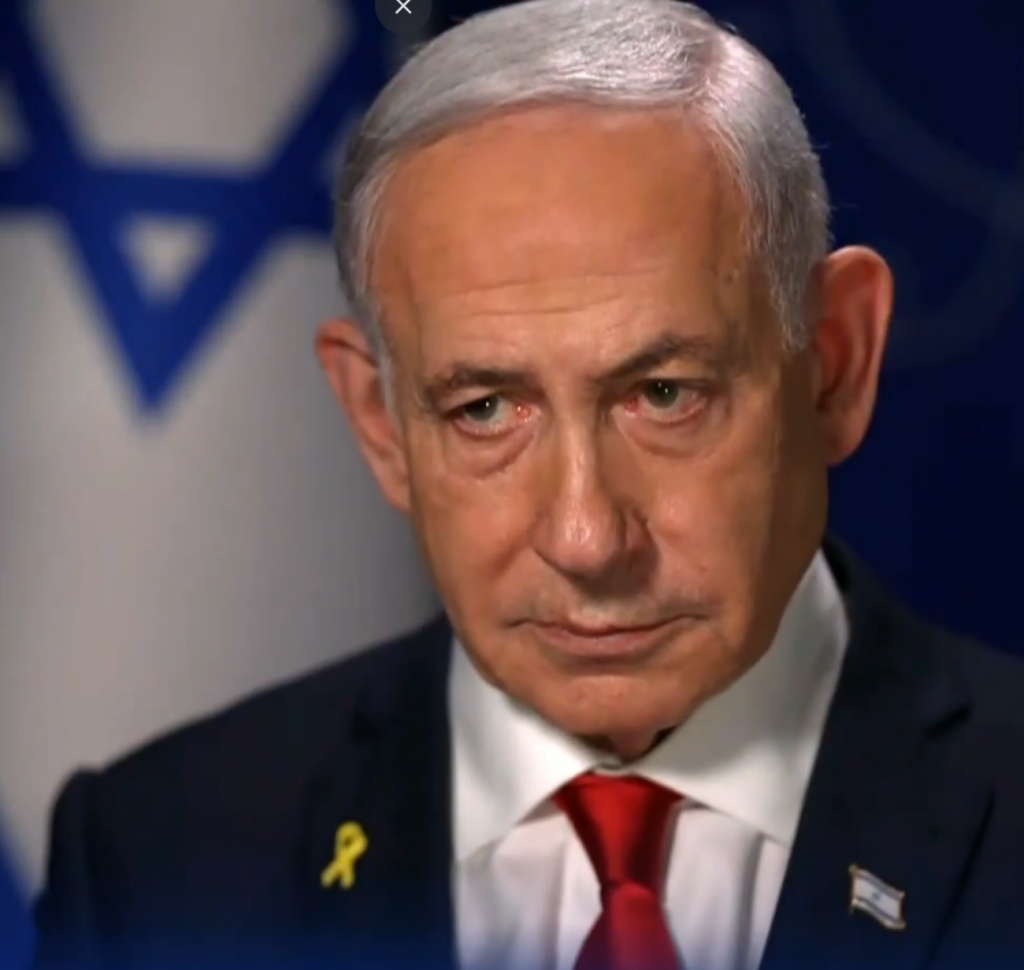
◉ Prime Minister Netanyahu: “Some have predicted that hostages will be released without a full withdrawal — that is true, and with God’s help, this will happen soon.”
Israel has demonstrated many times what “with God’s help” means.
It looks like another major event is about to unfold in the Middle East.
03|Tehran faces a severe water shortage; Iran claims relocation of its capital is a ‘last resort’ — what’s the real plan?
Although the move is presented as being for “civilian livelihood,” Tehran has many underground facilities. The regime’s stated concern about “ground subsidence” actually signals that Tehran is no longer a safe place for the Islamic Revolutionary Guard Corps (IRGC). The underground sites bombed by Israel have likely caused land collapse, and other targeted sites probably won’t survive future strikes either.
Iran’s president announced the new capital would be near the Strait of Hormuz — an area already under U.S. military surveillance and blockade. That means relocating from inland safety into the range of U.S. firepower. Abandoning Tehran is like abandoning their own “holy city,” alienating the faithful, and stripping Khamenei of his remaining authority.
This is particularly intriguing when viewed together with Israel’s earlier claim that it has achieved unexpected infiltration and operations inside Iran — where senior Iranian officials are reportedly lining up to defect to Israel. Meanwhile, Iran’s president, foreign minister, and defense minister keep shouting anti-Israel and anti-U.S. slogans while traveling the world — yet remain unharmed.
So is this a genuine capital relocation — or part of a coordinated “Day Four” plan with Israel and the United States?
04|What exactly is the connection between the withdrawal of the U.K. espionage case and Cai Qi?
◉ On September 15, the U.K. Crown Prosecution Service (CPS) withdrew its case against Christopher Cash and Christopher Berry, who had previously been charged with spying for the Chinese Communist Party (CCP).
According to media reports, the withdrawal was due to the absence of a key witness—Deputy National Security Adviser Matthew Collins—who had been expected to testify and officially define the People’s Republic of China as an “enemy.” Without this legal classification, a crucial element of the case could not be established, which became one of the core reasons for the withdrawal.
◉ Now, some media outlets are linking this matter to Cai Qi, claiming that he directed the operation. They suggest several possible motives:
❶ One narrative claims that Cai Qi acted on his own initiative—implying that he harbors divided loyalties toward Xi Jinping, hinting at internal power struggles. This is seen as another variation of the “Xi steps down, Li steps up” delaying tactic—creating false hope for opponents to prevent effective action against the CCP.
❷ Some so-called “China experts” abroad argue that Cai Qi had direct contact with the two “junior spies,” which seems highly unusual. People speculate about his motives—whether he had ulterior intentions—while others dismiss the idea as absurd, suggesting it explains why the case collapsed.
❸ Combined with earlier domestic rumors that “actor Yu Menglong’s death was linked to Cai Qi’s illegitimate child,” these discussions—whether about Cai Qi or Wang Huning—miss the point. Anyone within Xi Jinping’s tightly sealed inner circle who serves his “national policy” cannot act independently. The entire pyramid of command flows directly from Xi himself. When China eventually opens up, all of these people will face trial—none will escape. They will turn and attack each other like dogs
◉ From what perspective should this case be understood?
A Conservative MP’s aide and a schoolteacher allegedly passed sensitive information, via an intermediary, directly to CCP leadership—to Cai Qi. This storyline sounds implausible—”no wonder the case was dropped”—and is being used to make the British government look corrupt, incompetent, and excessively pro-CCP, thus eroding public confidence.
The more accurate understanding is this:
Cai Qi, as Director of the CCP’s General Office of the Central Committee, oversees operations initiated by the entire Central Committee. Party organs such as the Cyberspace Administration, the Central Propaganda Department, the Organization Department, and the United Front Work Department all participate. It may have been a “special operation” or a large-scale state espionage project targeting the U.K. Work is subcontracted layer by layer: somewhere down the chain, these two Britons allegedly handed certain information to a CCP agent, who then passed it upward. Since Xi Jinping personally directs all such operations—including those under the General Office—and Cai Qi serves as his chief of staff, Cai’s name appeared in British evidence tracing the chain of command upward. Because Xi refuses to acknowledge his dictatorial control, investigators stopped at the General Office level. Yet in truth, the source is Xi Jinping himself.
It’s like arresting a few low-level field agents in the south, tracing the trail back to the General Office or Central Military Commission, and then claiming that Cai Qi or a vice-chairman of the CMC personally directed them—thus portraying it as a factional struggle within Xi’s circle or as rogue acts, rather than a Party-state operation. But that interpretation is completely false.
These matters are not primarily Cai Qi’s personal responsibility. He oversees countless such operations—a vast web of minor agents and espionage activities that are ultimately consolidated in departments under the General Office, which reports to him, and he in turn reports directly to Xi Jinping.
◉ The key issue is the withdrawal of the main witness, because the Labour Party argued that China could not be called an “enemy state” in court.
As a left-leaning party, Labour tends to take a softer stance toward the CCP, which diverges from the U.K. military and intelligence community’s assessments.
Labour also fears the rapid political, diplomatic, and economic repercussions that might follow from officially designating China an “enemy.”
This episode exposes a broader problem in the U.K.: although judicial independence is claimed, the Prime Minister’s Office can still exert some influence—unlike in the United States. In U.S. law, the PRC is already defined as a “hostile power,” so courts don’t need political authorization to proceed—they follow the law directly.
Britain, however, has not yet politically designated the PRC as an “enemy.” The prosecution relied on the Official Secrets Act 1911, which uses the phrase “useful to the enemy.” Because that century-old law does not specify which countries qualify as “enemies,” political recognition is required for applicability. Political hesitation and weakness therefore stalled the case.
The acts in question occurred between late 2021 and February 2023, but the U.K.’s new National Security Act 2023—which contains updated espionage provisions—only came into force on December 20, 2023, and cannot be applied retroactively. As a result, prosecutors had to rely on the outdated 1911 Act. The old law required proof of activity “for the enemy,” while the new one merely requires involvement with a “foreign power.”
Britain’s conservative legal continuity has preserved stability for a thousand years—but it now shows serious lag when confronting the CCP’s form of unrestricted warfare.
05|The establishment of the U.S. Constitution and the evolution of the British system — lessons for China’s “Fourth Day.”
How the advantages and disadvantages among monarchy, aristocracy, and democracy led to the constitutional principles of fixed presidential terms, congressional checks and balances, judicial review, and a bicameral legislature.
The gap between the People’s Republic of China and these systems spans centuries. For thousands of years, China has had neither a genuine aristocracy nor democracy, nor even a Western-style monarchy — only an autocratic imperial system that treats the people as slaves.
This holds important lessons for choosing China’s so-called “Fourth Day”: overthrowing and dismantling the CCP regime; abolishing nuclear weapons and Leninist-style party structures; disbanding military forces; allowing China’s regions to exercise autonomy, develop independently, and form alliances freely; and establishing an international trusteeship framework under which civic consciousness can gradually take root and spread among the populace over several generations.
Britain’s monarchy, beginning with the Magna Carta of 1215, saw kings voluntarily limit their own powers; after the Glorious Revolution of 1688, the monarchy became embedded within the parliamentary system.
Britain’s aristocracy was represented in the House of Lords, composed of nobles and clergy; after the Reform Acts beginning in 1832, its power was steadily weakened. Today, the Lords retain only limited functions — mainly review and oversight.
Britain’s democracy is expressed through the House of Commons, which gradually evolved into a truly elected body controlling the power of government.
Britain’s evolution differs from America’s direct founding of a constitutional system. Over the past thousand years, Britain transitioned from a strong monarchy → a balanced system → parliamentary supremacy → democratization of the Commons, forming a hybrid system — one where traces of aristocracy remain, but democracy predominates.
It is not a pure separation of powers model, but rather a historically blended form shaped by continuous adjustment.

Responses